Rope, knots and string have a striking presence in contemporary art. Think of Chiharu Shiota’s current exhibition at Hayward Gallery, Threads of Life, where intricate, web-like installations explore memory, consciousness and the fragility of existence. Audiences are invited to walk into a vast network of intricate clusters of red string, often filled with ordinary objects like shoes, keys, beds, chairs and dresses. Meanwhile, at Yorkshire Sculpture Park, LR Vandy’s Rise uses the form and texture of rope to consider the textile’s industry’s role in Britain’s industrial history. Perhaps best-known are the performance artists, such as Ana Mendieta and Marina Abramovic, who turn the act of binding into powerful investigations into autonomy. The simple act of tying a knot holds centuries of history and countless interpretations.
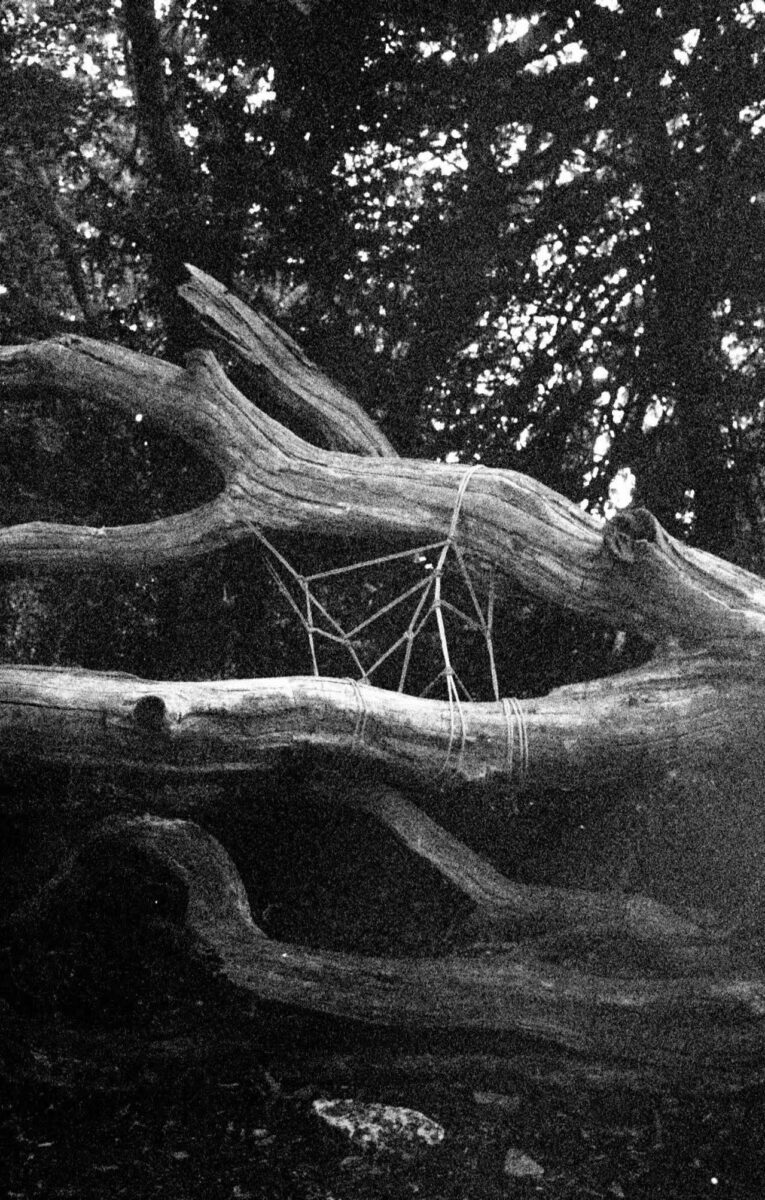
Xin Zhang (b. 2002) is a London and Beijing multidisciplinary artist and rope practitioner whose practice interrogates the intersections of intimacy, resistance and the body. She uses Shibari-inspired rope work – a traditional Japanese technique – alongside wax, fabric and found objects to create immersive installations and performances that challenge gendered aesthetics and normative perceptions of the body. Zhang is a fascinating addition to the artistic tradition, merging subcultural rituals with contemporary art to transform objectified bodies into empowered, expressive agents. Her work creates participatory environments that explore the delicate tension between constraint and vulnerability.
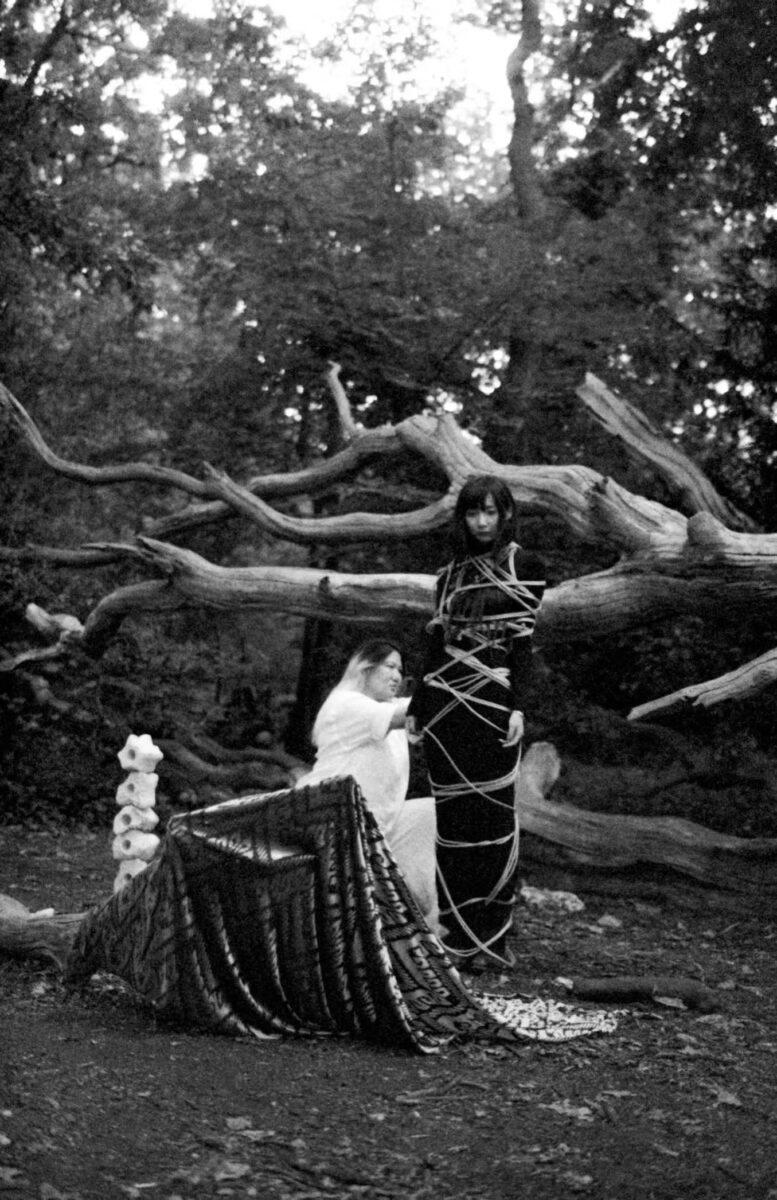
Zhang’s work extends to performance, where she employs the practice of rope tying to engage audiences in conversations around gender aesthetics and normative perceptions of the body. Here, she joins a rich and vibrant tradition of exploring objectification, agency and bodily autonomy through artistic performance. Most notable is Marina Abramović, an artist renowned for testing the boundaries of the body and audience control. In the groundbreaking Rhythm 0 (1974), she allowed viewers to use objects on her however they wished, sparking debates about consent, power and violence. Similarly, Yoko Ono’s Cut Piece (1964) invited audiences to walk on stage and cut away parts of the artist’s clothing. The provocative display turned visitors from passive observer to active participant, challenging the “gaze” on female bodies. Zhang also manifests the invisible aspects of gender dynamics, building on the pioneers who came before her. In Tactile Threshold, a performance art exhibition exploring intimacy and consent, ropes become a physical manifestation of the restraints often placed on women’s behaviour.
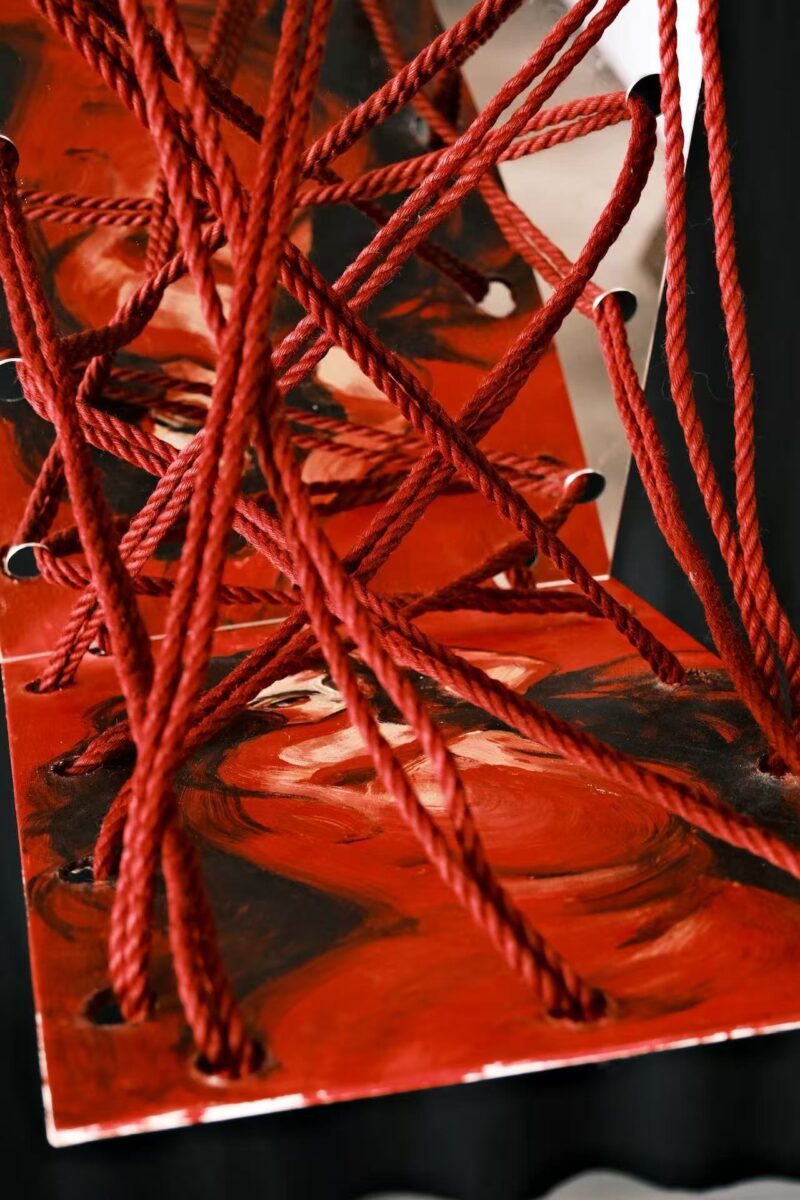
This investigation continues in Zhang’s other work, where she continues to use rope tying techniques to confront the viewer. Sculptural work The Bound Gaze threads red cord through a mirrored surface. The artist explains: “The mirror above implicates the viewer, reflecting their own gaze back into the work. This confrontation disrupts the act of looking, forcing awareness of complicity in systems of desire, shame and control. The bound body is not simply an object to be consumed, but a site of resistance – caught between visibility and concealment.” The same is true of her Cocooning painting series, which refers to “a psychic and cultural state where the individual is wrapped within layers of societal expectations.”
Xin Zhang takes knot tying, an artform practiced for centuries, and places it in perfect dialogue with our contemporary moment. Her work asks what it means to exist in the modern world, getting to the heart of gender, autonomy and objectification with a rare clarity. In spanning performance, sculpture, mixed media and painting, the artist employs disparate mediums to address a singular topic. She invites audiences into her world, an intimate space that borders on uncomfortable. She refuses to look away, provoking questions that can often be brushed aside. Zhang is a powerful voice on the horizon of contemporary practice.
Words: Emma Jacob
Image Credits:
All images courtesy of Xin Zhang.