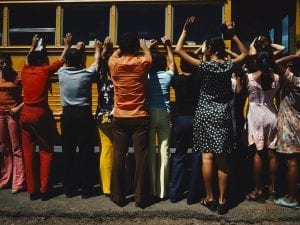
In 1948, a system of racial segregation became law in South Africa. First called “separate development”, it later came to be known as Apartheid. It saw thousands of Black, mixed-race and Asian individuals barred from living, operating business and owning land in huge swathes of the country, designated for white occupation. Conditions for people of colour were often much worse, and opportunities for education and employment severely limited. Apartheid came to an end in 1994, following decades of national protests and growing international opposition. Apartheid formally ended in 1994, following decades of internal resistance and mounting international pressure. That year, Nelson Mandela was elected president, a moment now commemorated annually as Freedom Day. It was within these turbulent conditions that one of South Africa’s most compelling photographic voices emerged.
Jo Ratcliff (b. 1961) uses the camera to ask how trauma inscribes itself onto the land. Each of her series are part of an exploration of South African identity, navigating conflict zones and the traces of deep social divisions caused by the regime. For Ractliffe, the spaces she photographs are not simply geographical locations, they are also places imbued with memory. Now, Jeu de Paume brings an exhibition of her work to Paris. It’s a major moment for the artist, who has been little shown across much of Europe. The exhibition examines the notion of “place” as a central theme of her work. Out of Place traces 40 years of creative output, from the start of her career to her most recent series. These 11 bodies of work highlight the evolution of her practice, which asks how these landscapes reveal invisible traces of history.
Ratcliff began her practice in the 1980s, whilst South African was still under Apartheid rule. In a 2022 interview with The Photographers’ Gallery, she explained how she first started working behind the lens: “In 1980 I bought a camera – an old, second-hand Nikkormat, I still have it. It changed everything; it was like a little light went on inside my head.” Her earliest works challenge traditional documentary photography. Rather than capturing events as and when they happened, she focused on their aftermath: the material and symbolic vestiges left behind. The artist continued: “It occurred to me that the separations between genres or conventions or approaches – whatever terms of classifications you might use – were not fixed. Things overlapped and so you could be political and poetic and expressive at the same time.” This approach is evident in her Crossroads (1986) series, produced amid violence and destruction in a township, where she “depicts the impossibility of return, the eradication of all hope, the obvious fragility of belonging.”
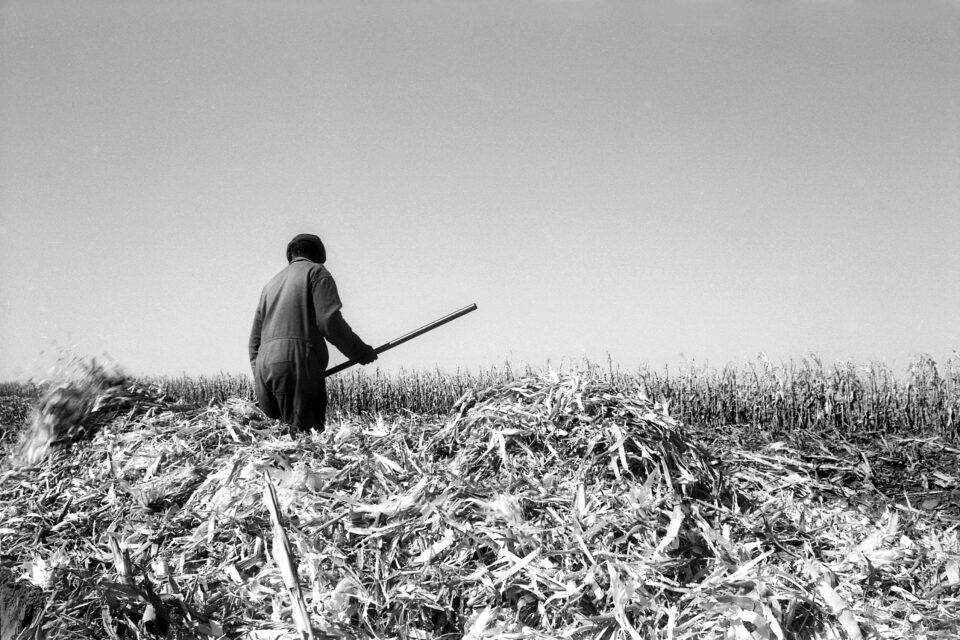
In the 1990s, as South Africa entered a period of democratic transition, Ractliffe embarked on a more experimental body of work. reshooting Diana (1990-1999) spans almost a decade, encompassing Nelson Mandela’s release, the first two post-Apartheid elections and the Truth and Reconciliation Commission hearings. The series was made using a Diana camera, a small plastic model she adopted after losing her photographic equipment in a burglary. The series is grainy and blurred, capturing the tensions of a changing society and resisting preconceived ideas of how a photograph should function. Jeu de Paume presents the snapshots as a grid of 40 images, constructing a sensitive cartography of turmoil and collective memory, where surveillance sites, transit zones and deserted spaces intertwine.
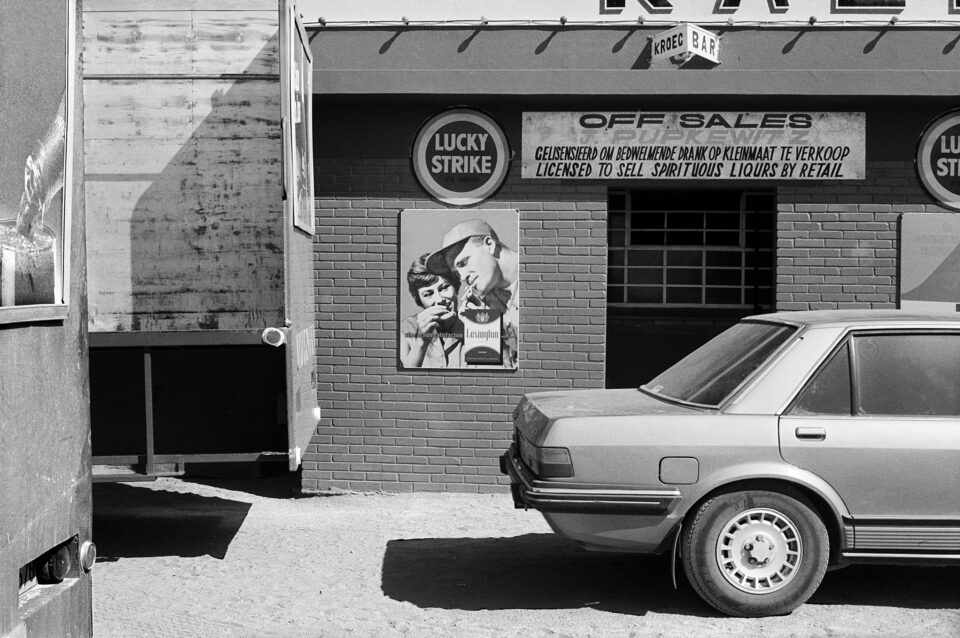
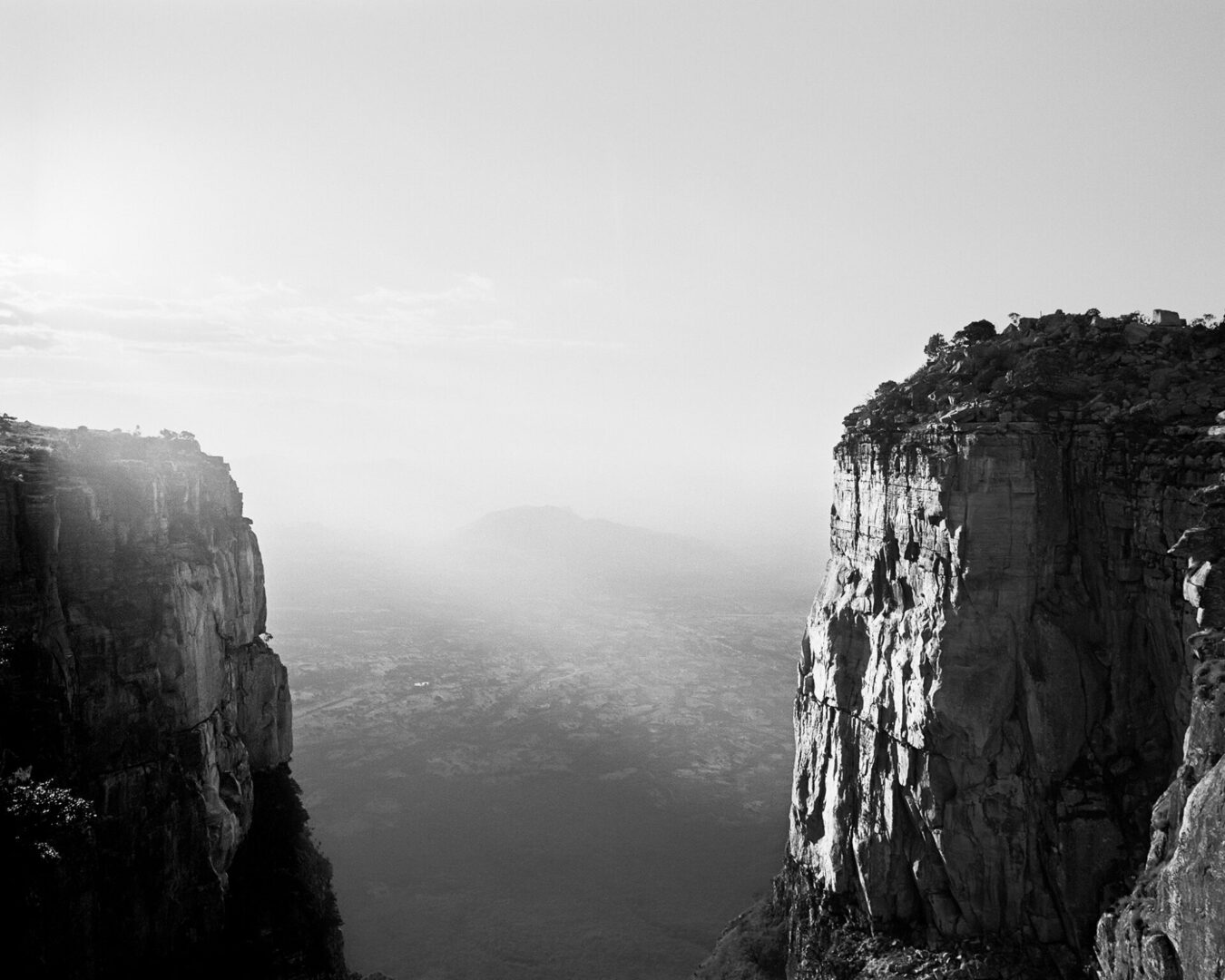
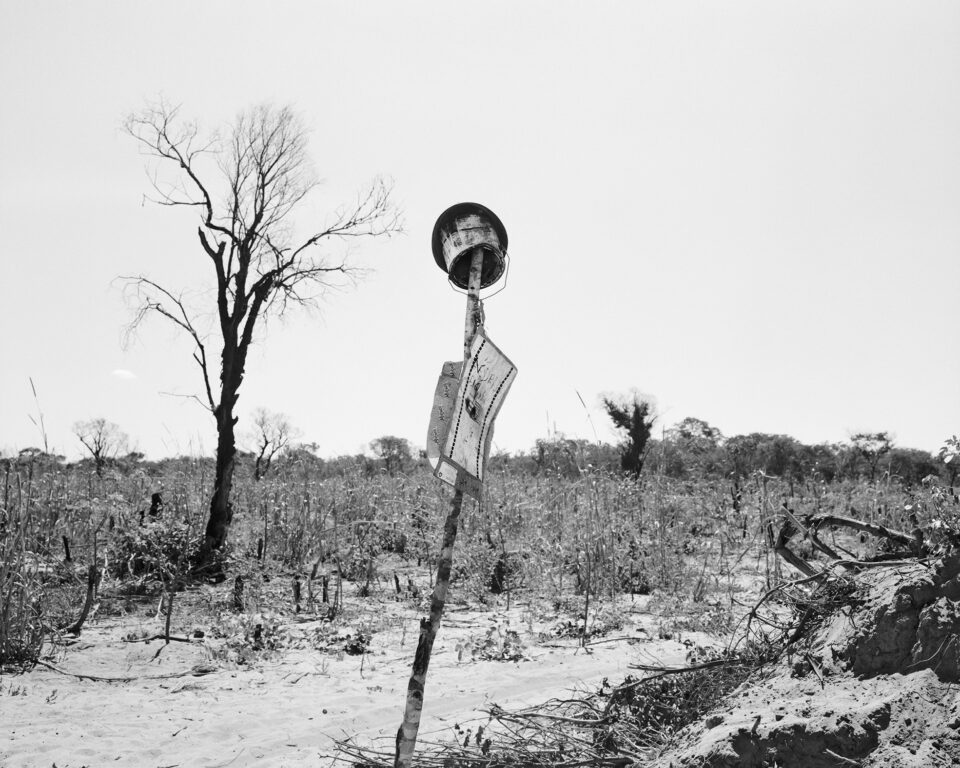
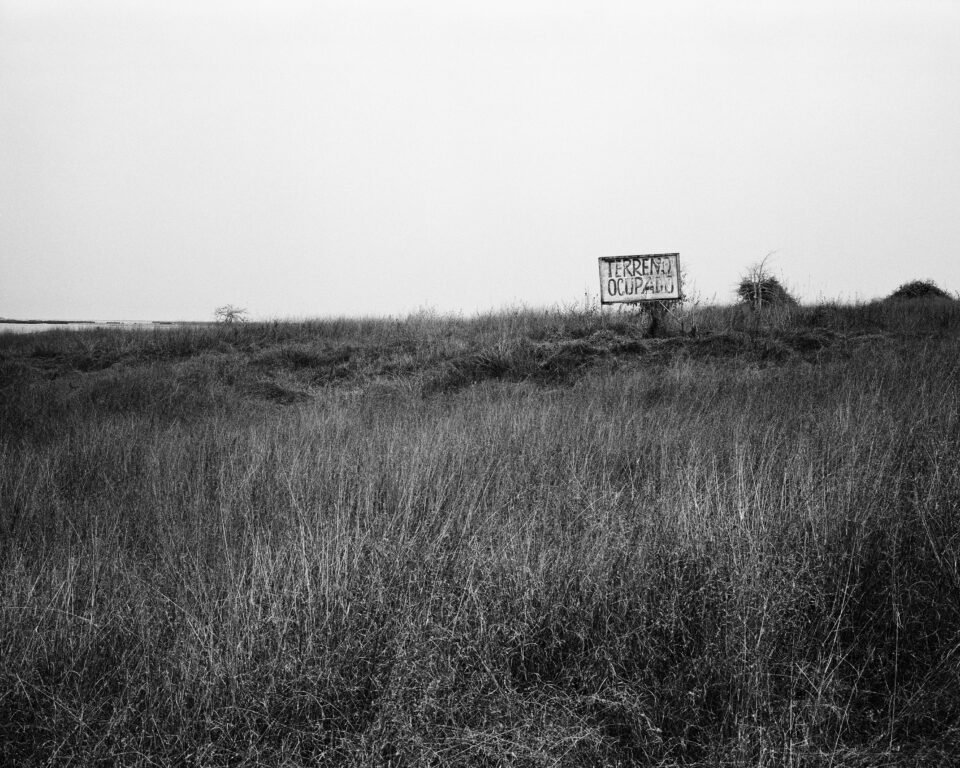
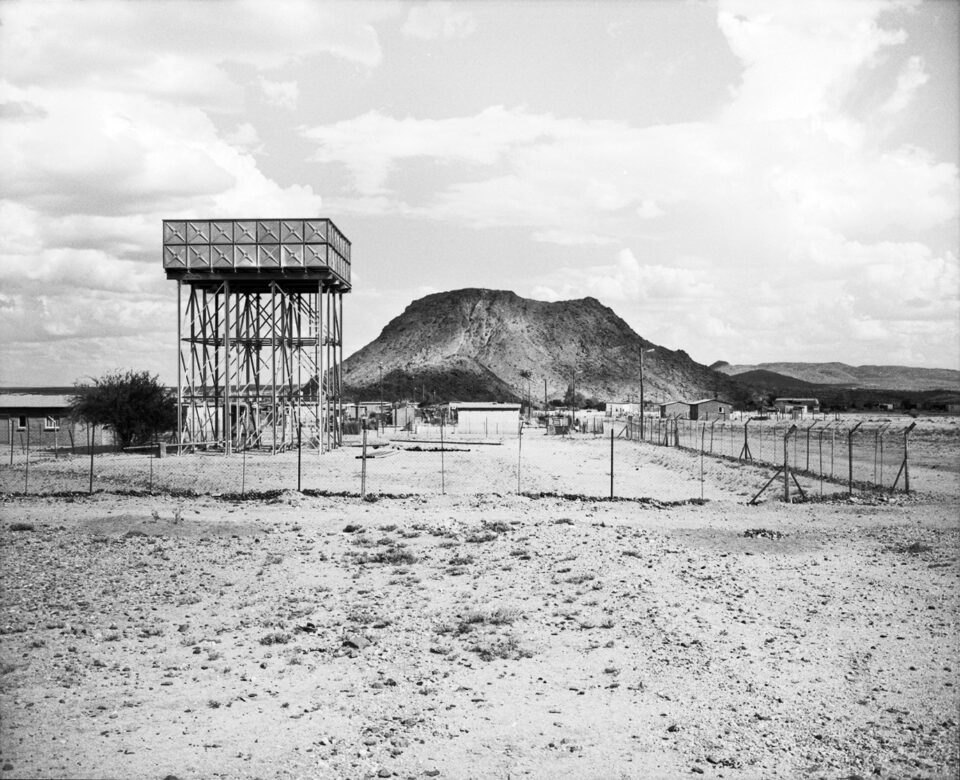
The artist’s focus broadened in the early 2000s, as she began photographing locations beyond South Africa. From 2007, she frequently travelled to Angola, a country devastated by armed conflicts fuelled by Cold War rivalries. In Terreno Ocupado (2007) and As Terras do Fim do Mundo (2009-2010), she explores the lingering impact of these conflicts. “The peaceful nature of these images contrasts strongly with the violence and chaos of their subject matter.” This tension continues in The Borderlands (2015). Ractliffe visited the Northern Cape province on the border between South Africa and Namibia, once occupied by the military. The images show the Reimvasmaak, which in February 1994 was approved as one of the first post-Apartheid land restitution projects, with 74,000 hectares returned to its rightful community. The historical event itself is not depicted, but rather its imprint – how the past continues to inhabit the present.
Out of place goes right up to Ractliffe’s most recent projects, with The Garden (2024 – 2026). In the mid-1980s, as South African townships were gripped by the violence of Apartheid, many residents transformed vacant lots into places of memory, resistance and community reconstruction. Now, 40 years on, Cape Town’s west coast continues to see acts of creation, with gardens born from inhabitant’s ingenuity and resilience. These gardens, designed using salvaged materials, are at once places of refuge, acts of resistance and direct actions that reflect the pressure of the real estate market and growing mining industry. Each space, whether devoted to remembrance, survival, play or beauty, affirms the community’s capacity to invent meaning and recreate connections.
For Jo Ractliffe, returning to a place means questioning time and making the landscape a living witness of history. Her photographs inscribe memory in the present and transform the act of seeing into a critical gesture. Placed alongside one another, these images reveal a practice concerned less with representation than with use: how space is occupied, altered and maintained over time. Out of Place does not monumentalise history. It observes how people live alongside it: adjusting, rebuilding, and, where possible, cultivating something that can endure.
Jo Ractliffe: Out of Place is at Jeu de Paume, Paris until 24 May: jeudepaume.org
Words: Emma Jacob
Image Credits:
1. Jo Ractliffe, Tundavala Gorge, Lubango, 2010, from the series As Terras do Fim do Mundo, vintage hand printed gelatin silver print.
2. Jo Ractliffe, On the road to Cuito Cuanavale IV, 2010, from the series As Terras do Fim do Mundo vintage hand printed gelatin silver print.
3. Jo Ractliffe, Vacant plot near Atlantico Sul, 2007 from the series Terreno Ocupado, vintage hand printed gelatin silver print.
4. Jo Ractliffe, N1 somewhere between Winburg and Ventersburg, 1982, silver gelatin print.
5. Jo Ractliffe, Southern national highway, Namibia, 1982 vintage hand printed silver gelatin print.
6. Jo Ractliffe, Water tank, Riemvasmaak, 2012 from the series The Borderlands, silver gelatin print.