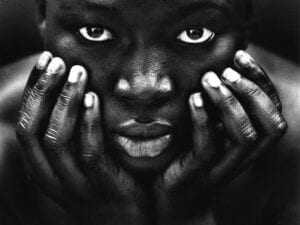
Life carries weight. Some burdens are private and individual, whilst others are shaped by and connected to the world around us. Two Temple Place’s 2026 exhibition, The Weight of Being, considers the relationship between personal pressures and the universal challenges faced by humanity as a whole. The exhibition positions mental health as a connecting thread that links all humanity, rather than an othering experience. In doing so, it offers a radical reframing of a topic that has historically been surrounded by stigma and taboo. It draws on a diverse selection of contemporary and 20th century British artists, exploring the profound ways that mental health can shape the trajectory of artistic expression.
The show follows the success of Lives Less Ordinary, Two Temple Place’s 2025 exploration of working-class life in British art. It serves as a reminder that the London venue is engaging with the most pressing questions of our time, offering a platform for those often overlooked by the mainstream artistic scene. The Weight of Being acts as a focal point of a year of cultural and community events, including partnerships with mental health charities, community groups, state-funded schools and regional collections and museums. The programme builds on curator Angela Thomas’ work at Hartlepool Art Gallery and their ongoing collaboration with national suicide-prevention charity Andy’s Man Club.
Visitors are invited to traverse the challenges of self and society through five distinct thematic sections. The exhibition opens with The Weight of the Everyday, which centres on the impact of personal experience on individual mental health and creative expression. Audiences then progress to Collective Struggles, which demonstrates the strength and resilience of communities navigating significant societal and political upheaval, including deindustrialisation, migrant crises and social movements. The works in this section are deeply moving, with humanity shining through even the most adverse circumstances.
One notable example is Rohan Patel, whose series But Where Are You Really From? takes its title from a familiar and often uncomfortable question, one that reveals assumptions about race, belonging and cultural authenticity. The artist’s maternal grandparents come from white, working-class communities in Hartlepool, North-East England, whist his paternal grandparents are from a rural village in Gujarat, India. Patel describes his identity as “shaped by the entangled legacies of empire.” His images situate the personal within the political, taken during a period of heightened cultural division, with incidents like the resurgence of far-right violence like the Southport riots, and the rise of Hindu nationalism in India. In this context, But Where Are You Really From? examines how the afterlives of empire continue to shape contemporary life.
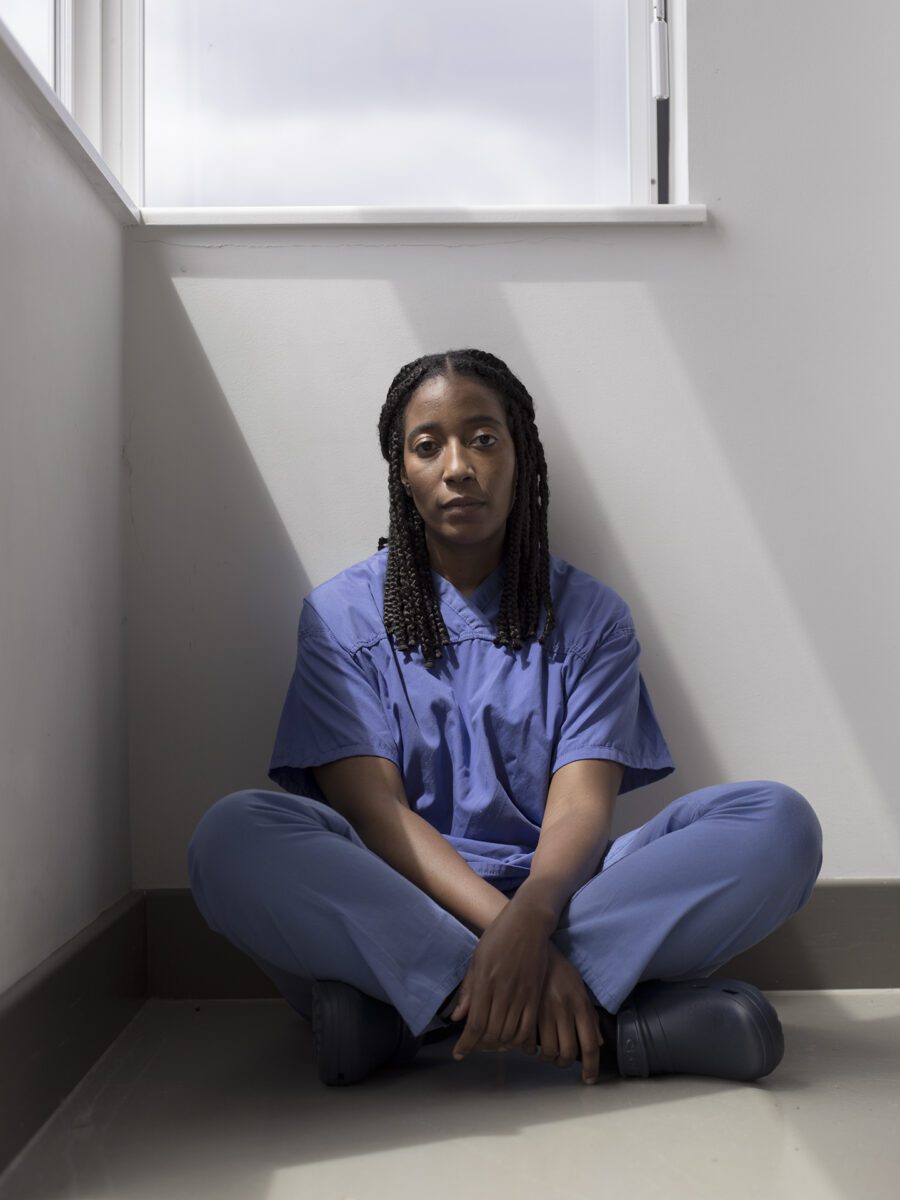
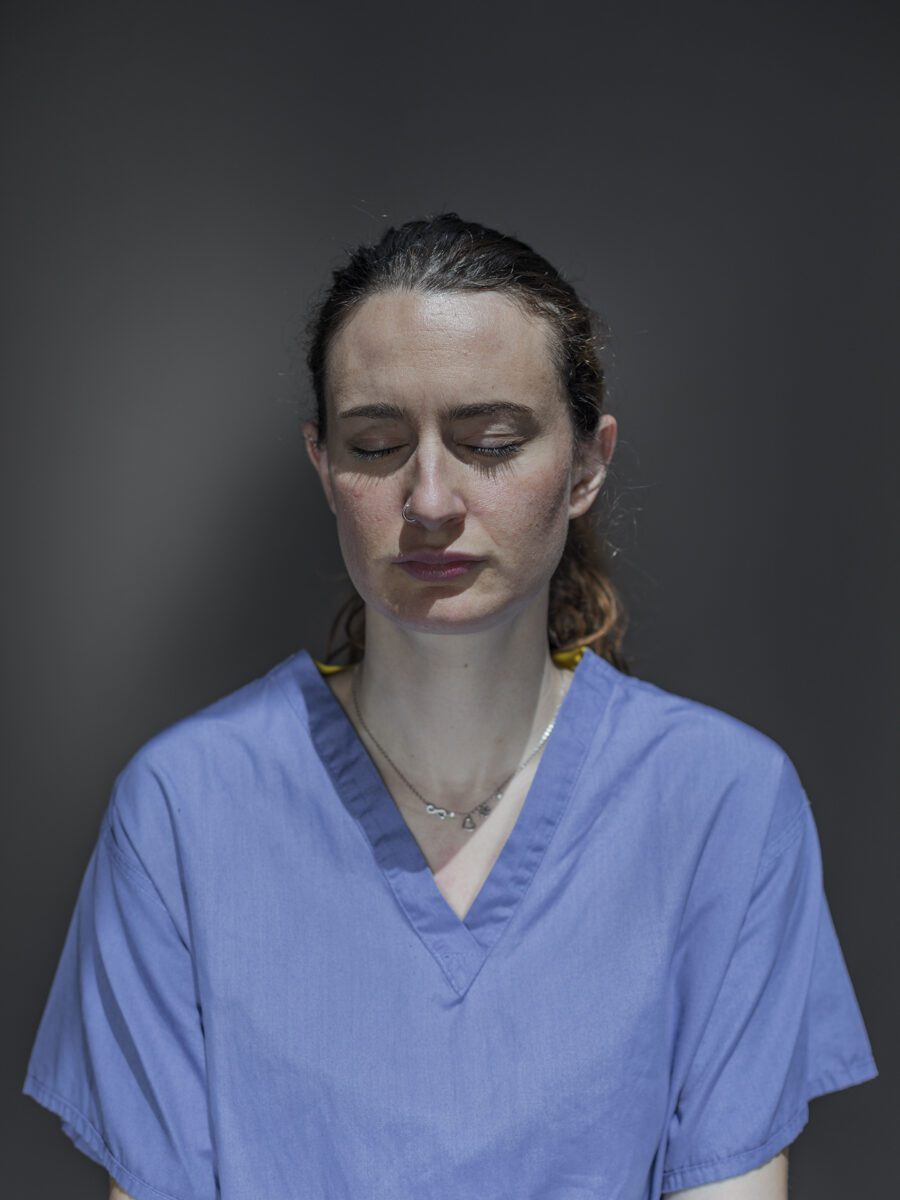
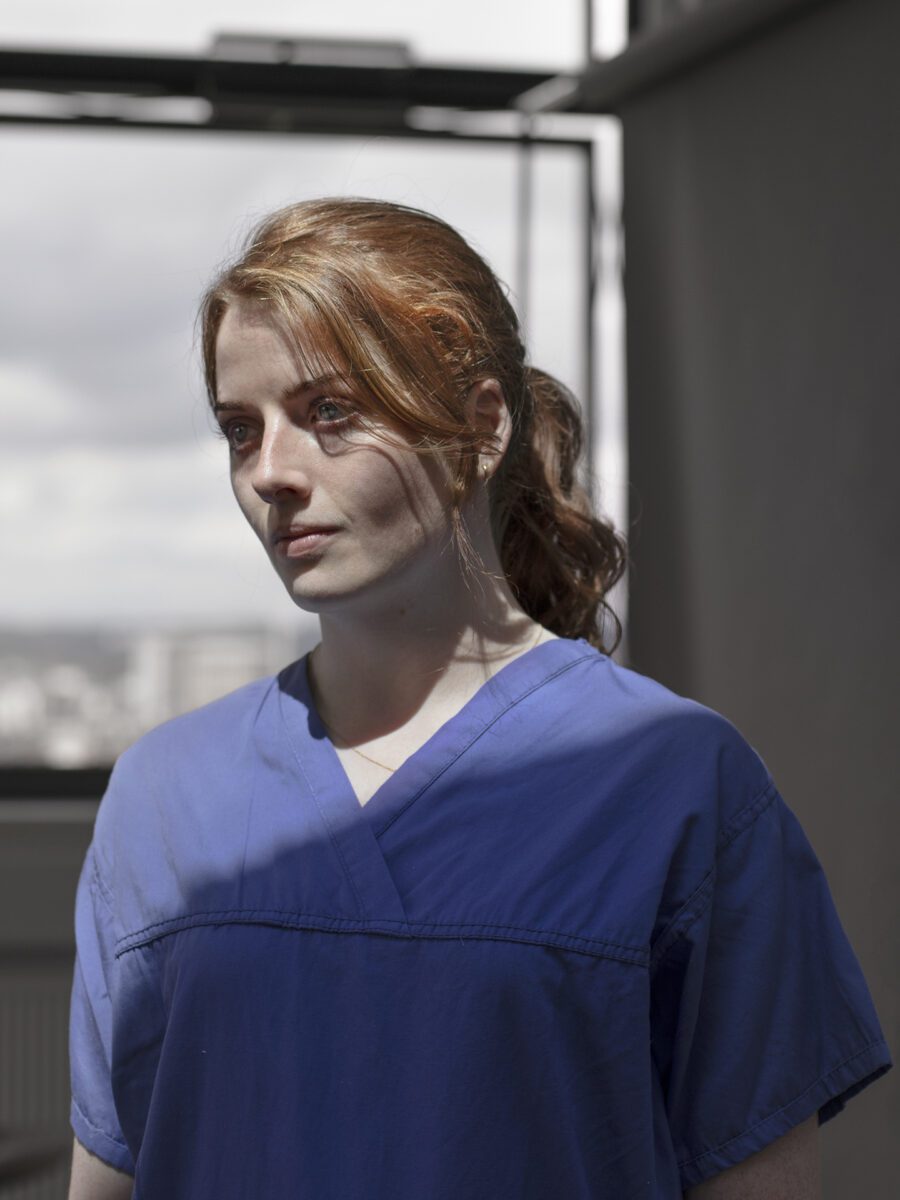
Other themes include Environment, which gathers works that reveal how place shapes the psyche. Whether through the comfort of home, the hardship of poverty or the tension of cultural complexity, they show how environments can nurture or constrain. Meanwhile, Human Vulnerability explores the portrayal of physical and mental illness through self-portraits, addressing themes of love, obsession and loss, and the strength to be found in empathy and compassion. Johannah Churchill is a former nurse turned photographer whose images draw upon her experiences in healthcare. Her practice moves between portraiture and documentary and is characterised by “an emotional exploration of what it is to be human.” The Weight of Being features a selection of Churchill’s portraits of NHS workers taken during the Covid-19 pandemic lockdowns and restrictions. The images show individuals in protective equipment and masks and their exhaustion and emotional burden are palpable.
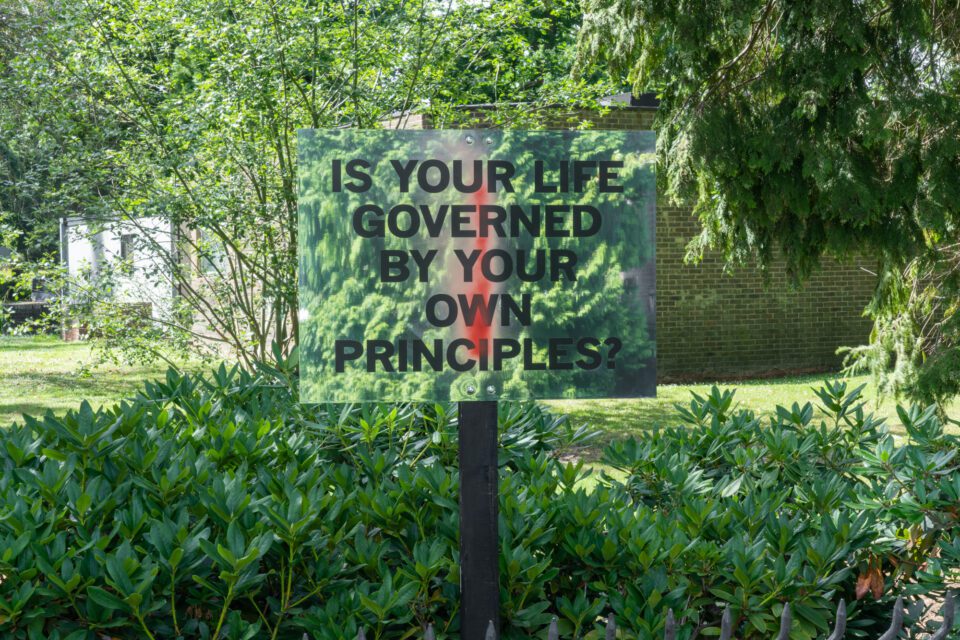
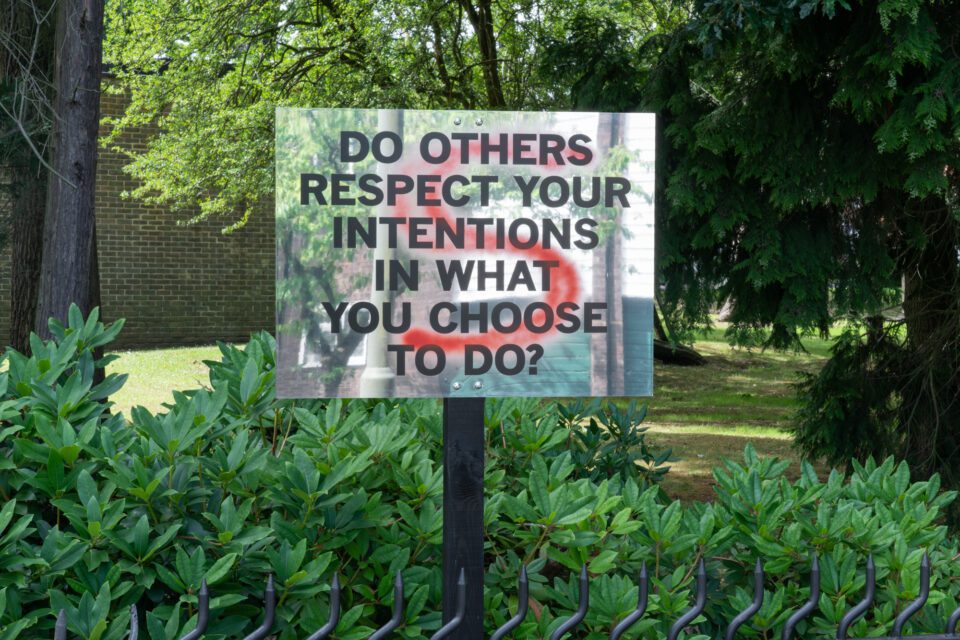
The final section – Sanctuary and Solitude – asks how landscapes, both real and imagined, serve as spaces for reflection, offering solace from urban and societal stressors. In facing post-war upheavals or dealing with contemporary crises such as Covid-19 and climate change, artists have turned to the outdoor world as a means of processing both collective anxieties and personal struggles. Here, Mark Titchner’s installations come to the fore, with outdoor signs that ask audiences probing and arresting questions: “Do you always act in your own best interest?” and “Is your life governed by your own principles?” The signs themselves are reflective, literally holding up a mirror to the reader.
Two Temple Place offers a complex and compelling exhibition, which resists easy categorisation and allows viewers to sit in the realities of what it means to be human. Each artist contributes to a considered and socially engaged show that reflects the realities of contemporary life across Britain today. As curator Angela Thomas says: “The Weight of Being does not offer solutions. It does not pretend that art can cure, fix, or neatly resolved. Instead, it invites us to sit with vulnerability and hope, and to see how they coexist.”
The Weight of Being is at Two Temple Place, London until 19 April: twotempleplace.org
Words: Emma Jacob
Image Credits:
1. Johanna Churchill, Charlie, After Nights 2021, 2021, photograph. © Johanna Churchill. Courtesy of the Artist.
2. Mark Titchner, Is Your Life Governed By Your Own Principles, 2019, digital print on aluminium. All Rights Reservec. DACS 2025 Courtesy of Bethlem Museum of the Mind.
3. Johannah Churchill, Alaides, June 2021, 2021, photograph. © Johanna Churchill. Courtesy of the Artist.
4. Johannah Churchill, Miriam, 2021. © Johanna Churchill. Courtesy of the Artist.
5. Mark Titchner, Do Others Respect Your Intentions In What You Choose To Do, 2019, digital print on aluminium. All Rights Reservec. DACS 2025 Courtesy of Bethlem Museum of the Mind.