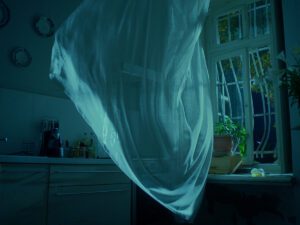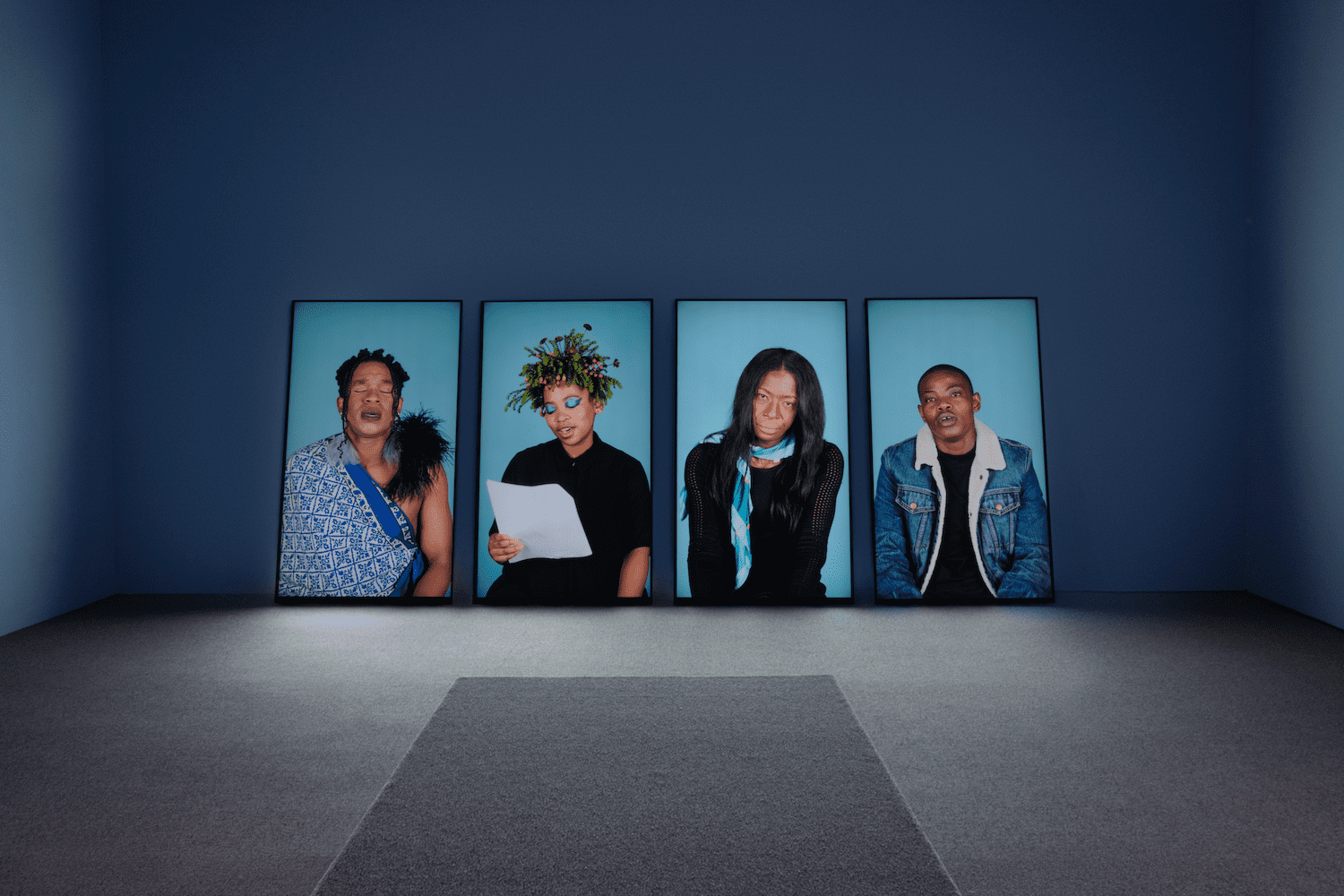
There is a quiet intensity that permeates Gabrielle Goliath’s Personal Accounts. The South African artist’s ongoing video series inhabits the second‑floor galleries and corridors of MoMA PS1, exploring the reverberations of patriarchal violence across continents. Rather than relying on spoken testimony, the work foregrounds the moments between words: breaths, sighs, laughter and tremors in the body. These intervals become carriers of meaning, revealing what is often rendered invisible in conventional narratives of trauma. The exhibition asks visitors to pause and attune themselves to gestures that are both fragile and insistent, intimate yet universal. In doing so, it challenges the assumption that speech alone conveys truth.
Collaboration lies at the heart of the project, shaping both its structure and emotional resonance. Survivors from Johannesburg, Kyiv, Italy and Scotland co-author the work, influencing the timing, rhythm and affective quality of each segment. In one video, a low hum threads through the frame, hinting at resilience amidst disruption, while in another, a long pause feels shared and collective, bridging the gap between viewer and participant. Goliath’s method privileges presence over narration, allowing the body to communicate histories that words might fail to capture. The gallery transforms into a space of listening, reflection, and ethical engagement. Here, silence becomes a conduit for intimacy, not absence.
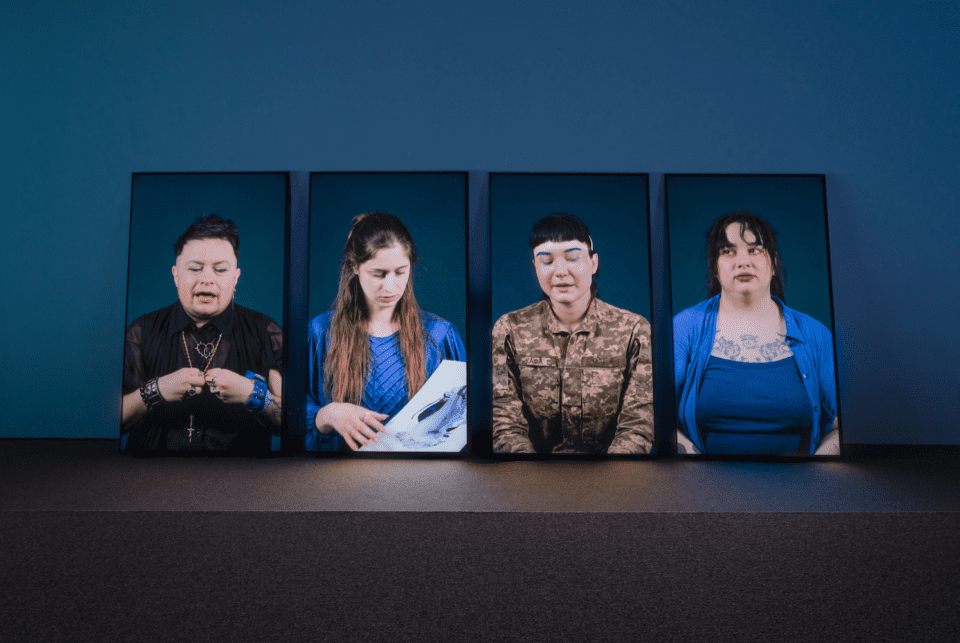
Sound and rhythm shape the exhibition’s immersive quality. Loops of breath and subtle vocalisations fill the corridors, weaving through screens and walls in a cadence that encourages meditation. The repetition is deliberate, emphasising the corporeal resonance of each gesture and highlighting the communal dimensions of experience. Visitors encounter empathy as a practice, not a passive sentiment, and are compelled to witness how subtle acts of survival accumulate into collective expression. The installation resists spectacle, insisting that attentiveness and reflection are integral to engagement. Every sigh, every stutter of sound, amplifies presence in ways conventional narrative cannot.
Personal Accounts resonates within a global discourse on trauma and testimony in contemporary art. Nan Goldin’s retrospective This Will Not End Well at Pirelli HangarBicocca in Milan explores similar terrain, presenting intimate photographs and films that document vulnerability, survival, and activism. Both artists challenge audiences to confront lived experience without mediating it through spectacle or sensationalism. Goliath, however, emphasises the unsayable – the spaces where speech does not exist yet meaning persists. In this context, her work reframes how viewers understand testimony, highlighting the power of subtle gesture, breath, and embodied expression as carriers of history and memory.
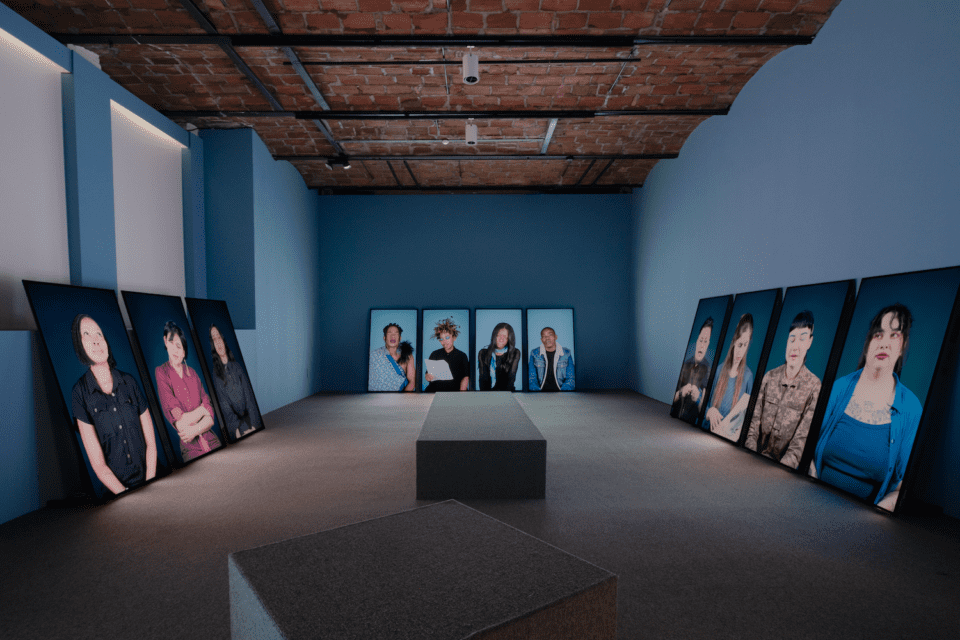
The exhibition’s curatorial framing reinforces its contemplative impact. Ruba Katrib, Chief Curator at MoMA PS1, structures the installation to encourage slow, attentive movement through the gallery, guiding visitors toward moments of quiet observation. Supplemental materials, including poems, prayers, or playlists offered by collaborators, extend the work beyond the physical space, fostering ongoing conversation. This relational approach aligns with feminist and decolonial curatorial strategies that prioritise ethics and attentiveness over spectacle. The gallery becomes a site where presence and reflection are inseparable from the content on display. Visitors are invited to inhabit the space as participants rather than observers, cultivating an active form of listening.
Spatially, the installation transforms the corridors and intimate gallery spaces into a series of interconnected experiences. Screens are arranged to allow for simultaneous viewing, yet the acoustic layering encourages singular focus, rewarding those who linger and return to a single frame. The interplay of light, shadow, and movement across walls echoes the rhythms of the videos themselves, creating a quiet choreography of presence. Goliath’s meticulous attention to these environmental details amplifies the tactile and affective dimensions of the work. The gallery becomes a living organism, responsive to the movement of bodies and the flow of sound. Each step is an encounter with another form of testimony.
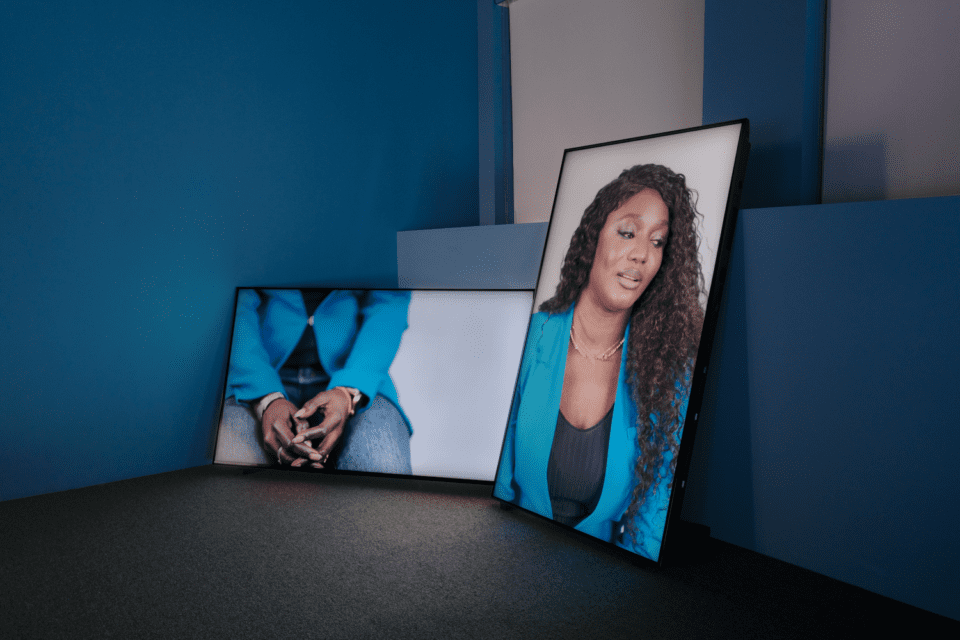
The collaborative and multisensory aspects of Personal Accounts are also political. By prioritising bodily expression over speech, Goliath questions entrenched hierarchies of credibility and representation. The body itself becomes a site of knowledge, capable of articulating trauma, memory, and resilience. Visitors experience survival not as narrative abstraction but as lived, visible, audible experience. These subtle gestures, though delicate, are imbued with the weight of history and endurance. The exhibition insists that bearing witness is both an ethical and aesthetic practice. What emerges from the galleries is not a story in the conventional sense but a profound meditation on attention and presence. Each pause, sigh, or tremor functions as a signal, urging viewers to engage deeply with what is often overlooked. The work illuminates the ways in which resilience is enacted through small gestures and the rhythms of everyday life. In contrast to exhibitions that privilege spectacle, Goliath creates a space that requires care and patience. Visitors are invited to slow their pace and inhabit the subtle dynamics of expression.
In Personal Accounts, Goliath transforms silence into a form of testimony that is urgent and unmissable. The intervals between words, the tremor of a shoulder, the pause of a breath, carry histories of survival that cannot be reduced to speech alone. The gallery becomes a space where presence is measured not by what is said but by what is felt, where empathy and attention are active, necessary acts. Attendees leave with a heightened awareness of how much meaning exists in the unsaid, how resilience is expressed in gesture as much as in voice. This is an exhibition that lingers beyond the gallery walls, insisting that the quietest moments often speak most powerfully. Goliath reveals the extraordinary force of attention itself.
Gabrielle Goliath: Personal Accounts is at MoMA PS1 until 16 March: momaps1.org
Words: Simon Cartwright
Image Credits:
Gabrielle Goliath. Personal Accounts. 2024–ongoing. Installation view of Gabrielle Goliath: Personal Accounts, on view at MoMA PS1 from November 6, 2025, through March 16, 2026. Photo: J Macdonald.