Every day the world contributes roughly 95 million photos to Instagram alone, a figure that underscores photography’s dual role as intimate expression and collective memory. In such a saturated visual culture, photography risks being reduced to mere immediacy, fleeting likes and ephemeral stories. Yet PhotoBrussels, now in its 10th edition, reminds us of the medium’s enduring capacity to slow time, to transform perception, and to forge connections across experience. Until 22 February 2026, Brussels will pulse with 52 exhibitions across galleries, art centres, home spaces and museums, offering audiences the chance to dwell in images that linger, provoke and inspire. In this city, photography asserts itself not as a supplement to life but as a lens through which the world can be interrogated and imagined anew.
This anniversary edition celebrates the vitality of Belgian photography while situating it firmly in a global dialogue. Nearly half of the more than 100 participating artists are Belgian, with three-quarters residing in the country, highlighting a dynamic local scene that is both introspective and outward-looking. As the festival’s founder, Delphine Dumont, notes: “Photography deserves a central place within the contemporary cultural landscape.” Over 10 years, PhotoBrussels has built an ecosystem where emerging and established artists coexist, where aesthetic risk is embraced alongside mastery, and where the city itself becomes a living gallery. In Brussels, the image is not only displayed but embedded in everyday experience, a practice that echoes the way photography shapes memory, identity and social awareness.
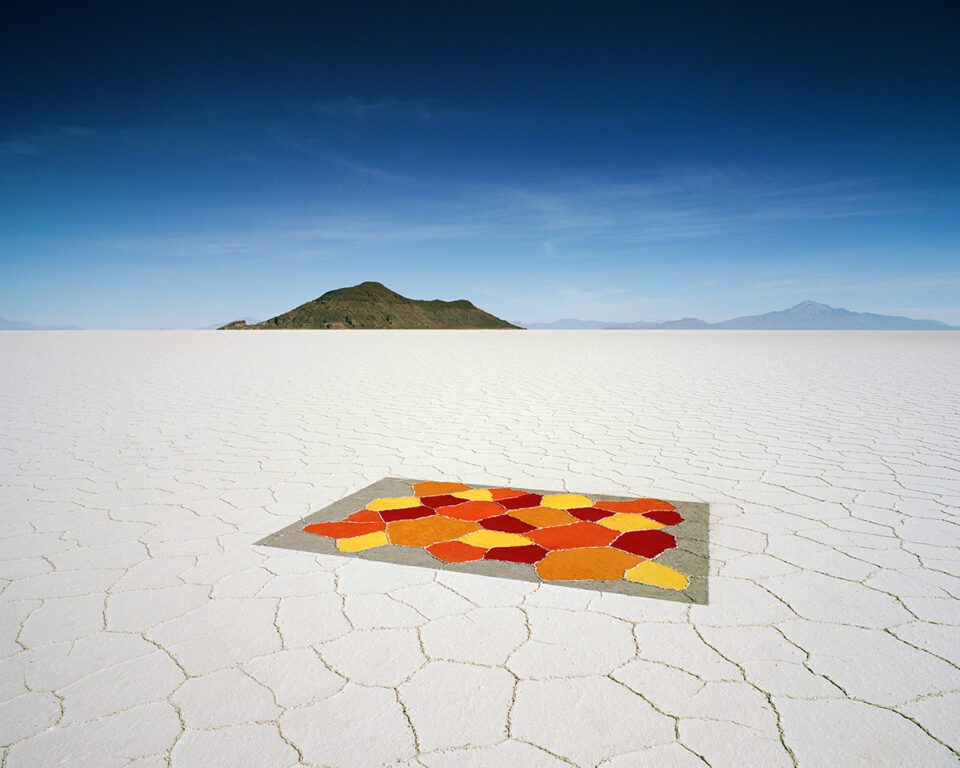
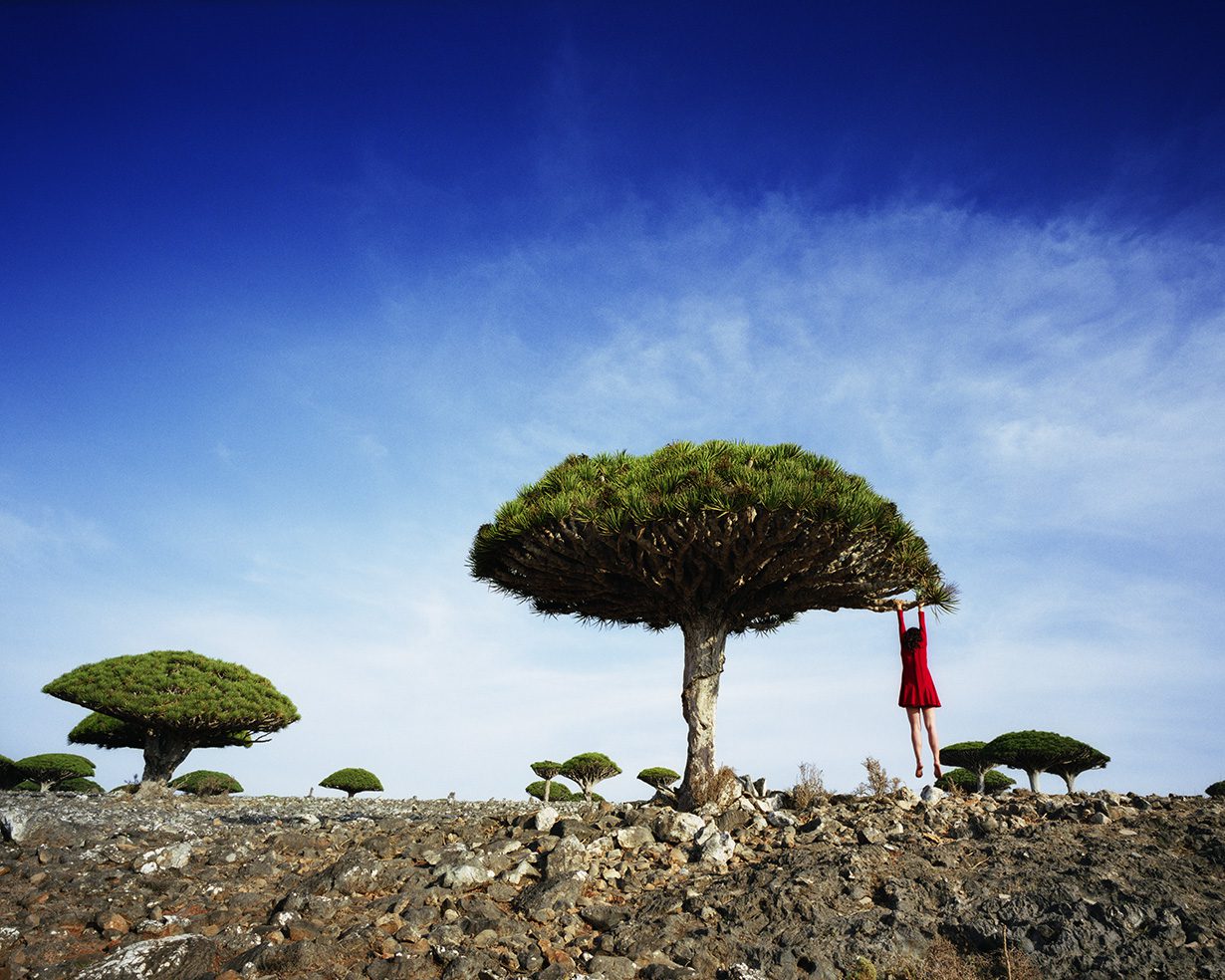
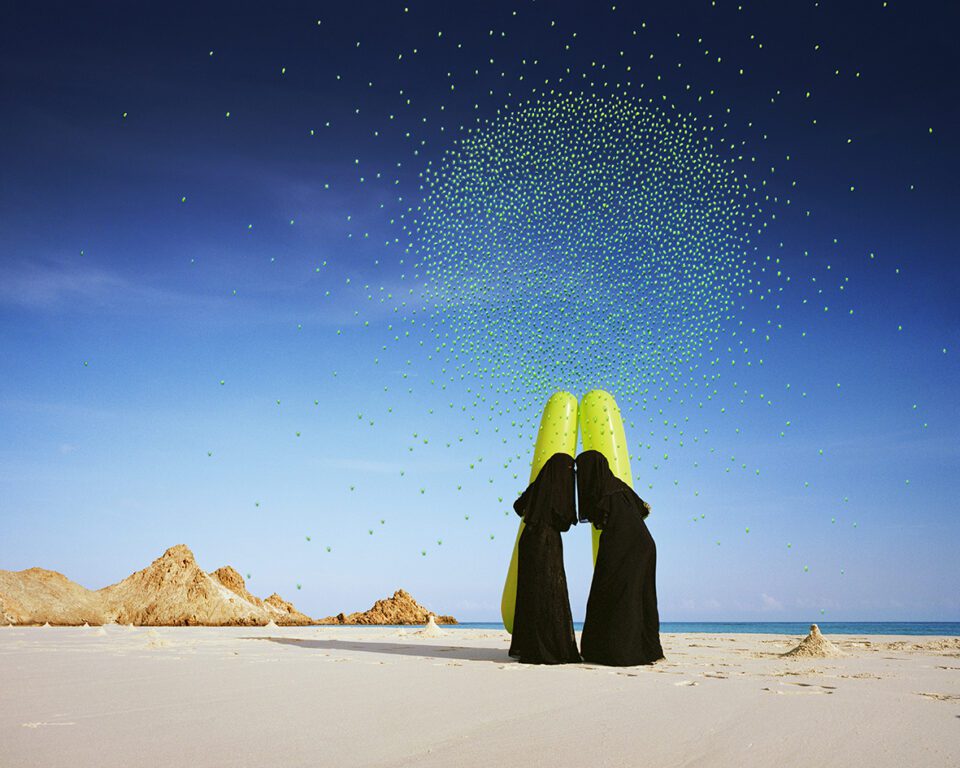
Memory and imagination intersect at the heart of this year’s programme, threading through immersive installations, intimate portraits and sculptural interventions. Scarlett Hooft Graafland’s Beyond the Horizon at Michèle Schoonjans Gallery exemplifies this sensibility. Her work blends light, sculpture and photographic imagery, transforming landscape into a vessel for emotion and temporal reflection. The series encourages viewers to inhabit a space that is at once familiar and uncanny, prompting a reconsideration of how images mediate perception. Similarly, Michael Ackerman’s Homesick New York at box galerie captures the fractured intimacy of urban life with quiet urgency, revealing the human rhythms and silences that often go unnoticed amid city noise. Ruud Van Empel’s Making Nature at Galerie Fontana blurs the boundaries between the real and the constructed, presenting nature as a poetic tableau that feels cinematic yet disturbingly artificial. In these works, photography extends beyond documentation into the realm of the sensorial, a reminder that the medium’s power lies not only in seeing but in feeling.
Across the city, galleries, museums and alternative spaces create a networked experience of image-making, inviting audiences to traverse both physical and conceptual terrain. Brussels now occupies a distinctive place alongside Rencontres d’Arles, Paris Photo and Photo London, yet it retains a particular intimacy. The festival’s curatorial ethos, balences local talent with international vision, emerging voices with established names, which underscores photography’s plural capacity: to preserve, to question and to invent. In this context, the medium is not static; it evolves in dialogue with society, culture and technology. Photography, in Brussels, is simultaneously archive, artwork and agent of reflection.
The Belgian photographic scene, as highlighted in this milestone edition, is a site of sustained experimentation. Dumont observes that the festival has nurtured a generation of artists whose aesthetic boldness challenges convention while remaining socially engaged. This focus on new voices ensures that photography remains a living medium, one capable of addressing urgent questions of identity, connection, environmental awareness and social transformation. The inclusion of these emerging perspectives alongside veteran practitioners fosters a dialogue across generations, emphasizing photography’s role as both a record of the present and a catalyst for imagination. In Brussels, the photograph becomes a site of exchange, a space where the intimate meets the collective, and where contemporary issues are explored.
Photography today is increasingly understood not merely as an image but as an encounter. The festival’s diverse programming – from large-scale installations to quiet domestic interventions – demonstrates how photographs can provoke, comfort and unsettle. Beyond the frame, audiences engage with spatial and temporal dimensions of the medium, exploring how images inhabit memory, narrative and emotion. This curatorial approach echoes a broader contemporary trend: the recognition that photography is never neutral, never passive. It mediates experience, shapes social consciousness and offers a mirror to the world we inhabit. In an era of constant visual stimulation, PhotoBrussels insists that photography’s value lies not in quantity but in resonance, in the ability to leave a trace upon the viewer.
Brussels’ role as a cultural hub is amplified by the festival’s reach across venues, from museums and galleries to art centres and alternative spaces. This multiplicity reflects the city’s layered identity: creative, inclusive and ever-evolving. It also underscores the festival’s commitment to accessibility, ensuring that photography is not confined to elite circles but shared across communities. The city itself becomes part of the artistic experience, a canvas where public space and private vision intersect. In this sense, PhotoBrussels enacts a model for contemporary photographic practice, one in which the medium operates democratically, inviting reflection, dialogue and participation.
The interplay of local and global perspectives defines much of the festival’s strength. Belgian artists are foregrounded not as isolated phenomena but as contributors to an international conversation. The festival’s founder frames this as part of a larger mission: revealing emerging talent, supporting artistic creation, and situating Belgium within a dynamic European photographic landscape. By balancing national pride with global engagement, PhotoBrussels affirms that photography is both rooted and mobile, a medium that transcends borders while retaining a sense of place. In a world saturated with images, such curatorial intention reminds us that meaning is not inherent but crafted, and that the photograph can articulate both individual vision and collective understanding.
Photography’s significance today is inseparable from its capacity to transform perception. As visitors navigate the festival, they encounter works that challenge conventional narratives, destabilize familiar tropes and invite speculative interpretation. Whether through Ackerman’s intimate urban explorations, Van Empel’s reimagined natural worlds or Graafland’s immersive landscapes, images compel us to reconsider what we know, what we feel, and how we relate to space and memory. This capacity for reflection is central to contemporary photography: it is a medium of inquiry as much as display, a tool for investigation as well as delight. PhotoBrussels, in marking a decade of this mission, affirms that photography is not only relevant but essential to understanding our contemporary moment.
In the 10 years since its inception, PhotoBrussels has matured from a local initiative into a major European event, gathering audiences around a programme that is demanding, socially engaged and aesthetically ambitious. Its longevity is a testament to the medium’s enduring resonance, the city’s commitment to the arts and the vibrancy of the Belgian photographic community. As Dumont reflects, the festival continues to assert its mission: to offer an open, unifying and ambitious platform in service of artists and the public gaze. In a culture of endless images, PhotoBrussels reminds us that photography is not simply about accumulation but about attention, care and dialogue. It demonstrates that even in an era of visual overload, the photograph retains the power to move, provoke and inspire.
Ultimately, this 10th edition is a celebration not only of Belgian photography but of the medium itself. Photography remains a mirror, a vessel for memory, a platform for imagination and a tool for reflection. As the festival demonstrates, it thrives at the intersection of local insight and global conversation, personal expression and shared experience. In Brussels, photography is no longer ancillary to contemporary culture; it is central, vital and alive, a medium that continues to shape how we perceive the world and, in turn, how we inhabit it. PhotoBrussels is proof that even amidst the millions of images we produce daily, the photograph can transcend immediacy to speak profoundly and collectively.
PhotoBrussels Festival runs until 22nd February: photobrusselsfestival.com
Words: Anna Müller
Image Credits:
1. Dragons Blood © Scarlett Hooft Graafland/Courtesy Michèle Schoonjans Gallery.
2. Carpet © Scarlett Hooft Graafland/Courtesy Michèle Schoonjans Gallery.
3. © Camille Peyre.
4. Kiss © Scarlett Hooft Graafland/Courtesy Michèle Schoonjans Gallery.
5. Copie de PANORAMIC, Studio 4 © Courtesy of Frederik Vercruysse and Spazio Nobile.
6. © Peter Waterschoot.