

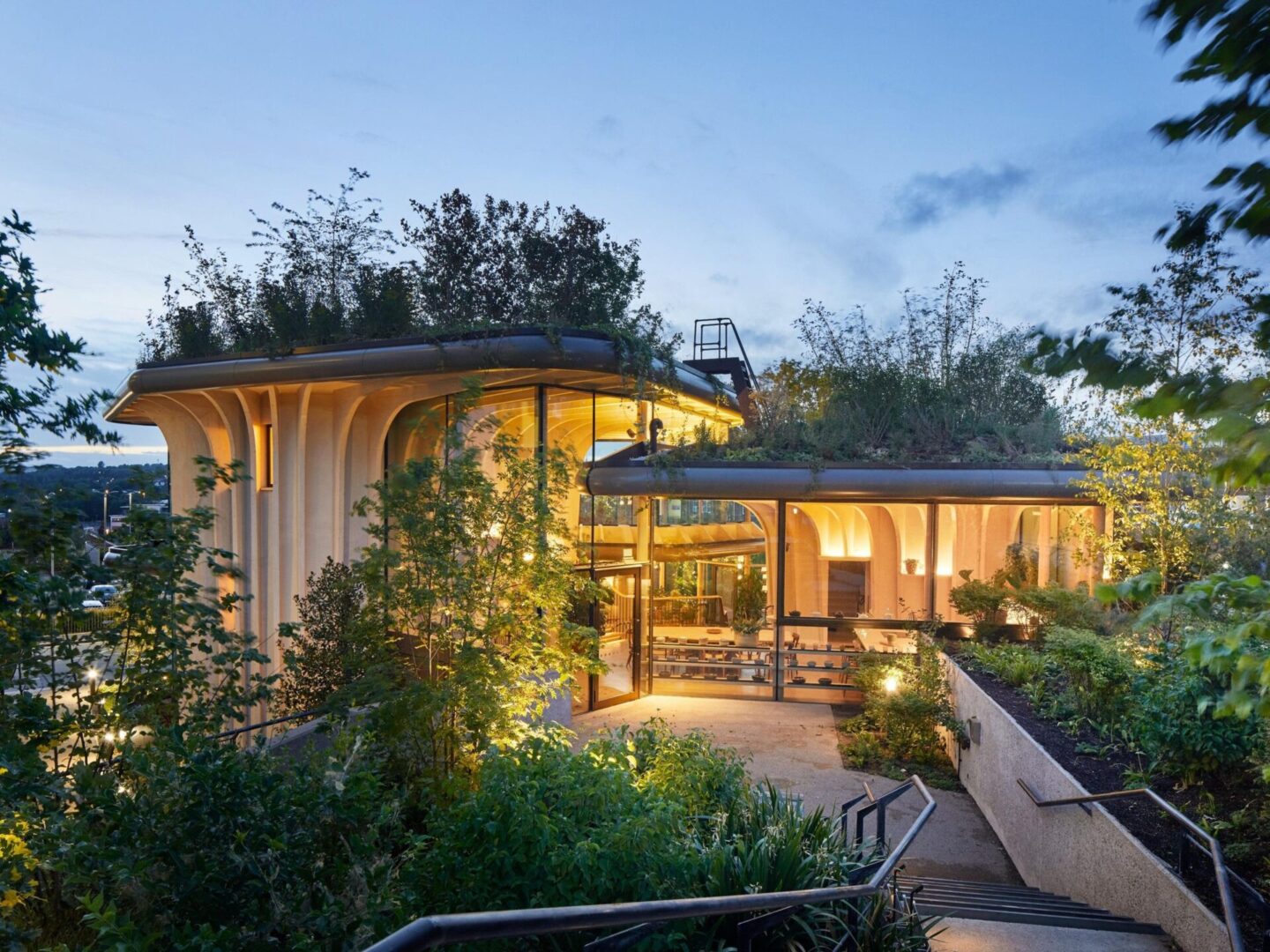
Architecture is never just about buildings. It is a way of understanding place, memory and care, shaped by the cultural traditions of a place and the people who inhabit it. The very best structures respond to social change, ecological responsibility and human experience, creating something that is perfectly in harmony with its surroundings. These five exhibitions spotlight the designers and buildings that shape how we live, heal and connect. They include Geoffrey Bawa’s quietly radical reimagining of Modernism in Sri Lanka; the intricate designs of Herzog & de Meuron; and contemporary practices that open up new ways of living.
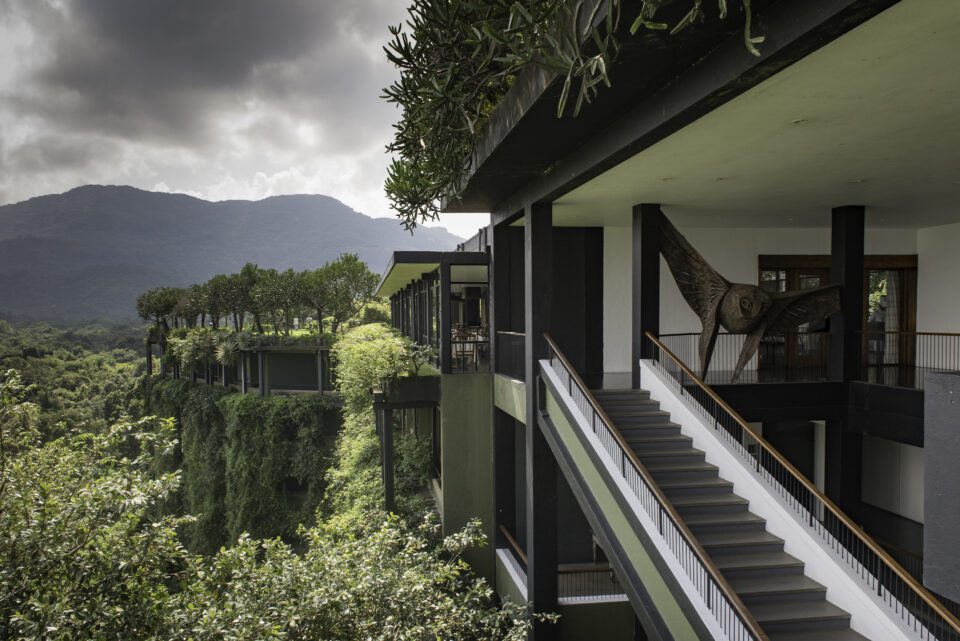
Geoffrey Bawa: Architecture for the Senses
Vitra Design Museum, Weil am Rhein | Opens 26 September
Geoffrey Bawa (1919-2003) counts as one of the most influential 20th century architects in Asia. His remarkable output shaped the very fabric of postcolonial Sri Lanka, including hotels, private residences, schools, universities, factories, office buildings and the country’s parliament. Bawa blended the principles of Modernism with vernacular and traditional elements to form a distinctive visual language, sensitively incorporating local materials and cultural identities. It’s an approach that was radically ahead of its time, considering an architectural landscape in sync with ecological, social and cultural contexts. Today, his style is being rediscovered worldwide as a guiding inspiration for socially and ecologically sustainable building practice. Vitra Deisgn Museum and M+, Hong Kong are part of this resurgence in interest, presenting the first major retrospective on Bawa in two decades. The exhibition draws upon an unprecedented wealth of materials, bringing to life the captivating, sensory quality of Bawa’s enduring legacy.
Memoryscapes: Architecture Connecting II
Louisiana Museum of Modern Art, Copenhagen | Opens 22 January
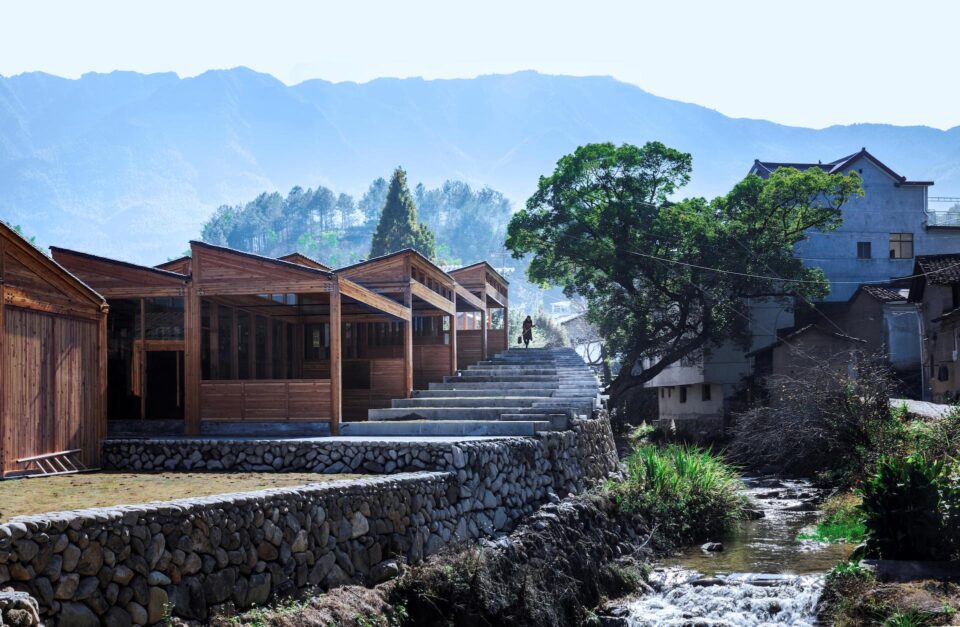
Louisiana Museum of Modern Art is an architectural spectacle. Located on the Danish coast, it strikes a rare and delicate balance between landscape, architecture and art that makes it an attraction in its own right, distinct from the masterpieces housed inside. Its series, Architecture Connecting, builds on this design prowess, presenting a number of exhibitions that explore how architects incorporate other sciences into their practice. The latest iteration is Memoryscapes, which looks at how Japanese architect Tsuyoshi Tane and Chinese studio founder Xu Tiantian take different approaches to cultural geography. Tane adheres to a method referred to as “Archaeology of the Future”, based on in-depth studies of diverse historical materials and narratives about the site, including traditional ways of building, geological changes and cultural customs. Meanwhile, Xu Tiantian uses techniques inspired by the Chinese practice of acupuncture, applying it to the revitalisation of ancient buildings without the need for renovation.
Tate Liverpool + RIBA North | Until 22 February
The Stirling Prize is the UK’s most prestigious award for architecture, celebrating buildings that have made a significant contribution to the evolution of the built environment. In 2025, six projects were shortlisted, from the restoration of one of the UK’s most recognisable landmarks, to a pioneering new medical research facility, a contemporary almshouse designed to reduce isolation for older residents, a university’s “factory for fashion”, a fully accessible home and a creative house extension. This year’s winner was Appleby Blue Almshouse, a centre high-quality social collective housing for older people in Bermondsey, London. According to the Jury, “the architects were aware that one of the biggest challenges of growing older is increased isolation. The design attempts to remedy this by creating spaces that encourage chance meetings and places to chat with friends.” Visitors to Tate Liverpool can discover how these buildings were created and hear from the people who designed them through film, images and interviews.
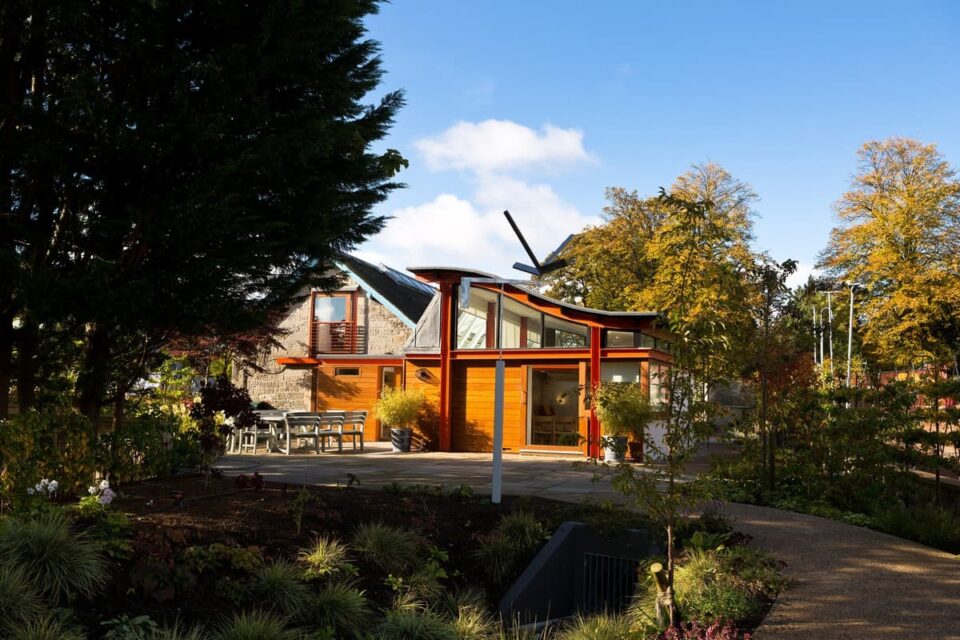
Maggie’s: Architecture that Cares
V&A, Dundee | Opens 6 March
Maggie Keswick Jencks was 47 when she found out she had breast cancer. Five years later, in 1993, she was told that it had returned. After hearing this, Maggie and her husband Charles discussed the need for somewhere “better” for people with cancer to go, outside of, but nearby to, the hospital. The idea was that with the right support, “nobody would lose the joy living in the fear of dying when diagnosed with cancer.” Now, Maggie’s has 32 specialist cancer centres across the UK and internationally. Maggie’s: Architecture that Cares celebrates 30 years of the charity and the power of inspiring locations, exploring their groundbreaking approach to design. The show brings together the voices of centre visitors and staff, alongside the globally recognised architects who have designed these remarkable buildings. Each centre is a unique space, designed with care by renowned architects from around the world, including Frank Gehry, Zaha Hadid, Richard Rogers, Norman Foster and Benedetta Tagliabue.
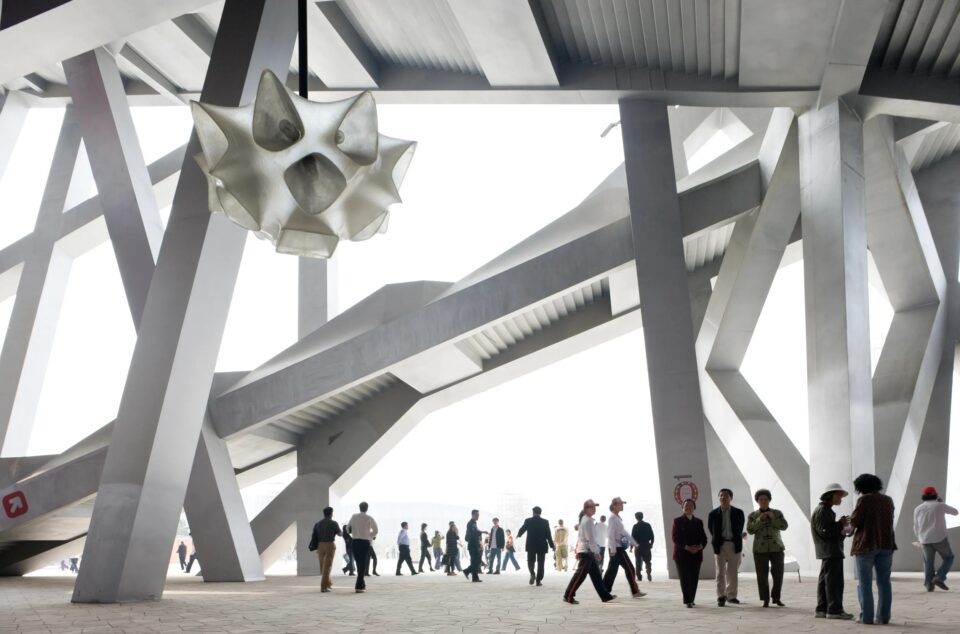
M+, Hong Kong | Opens 12 September
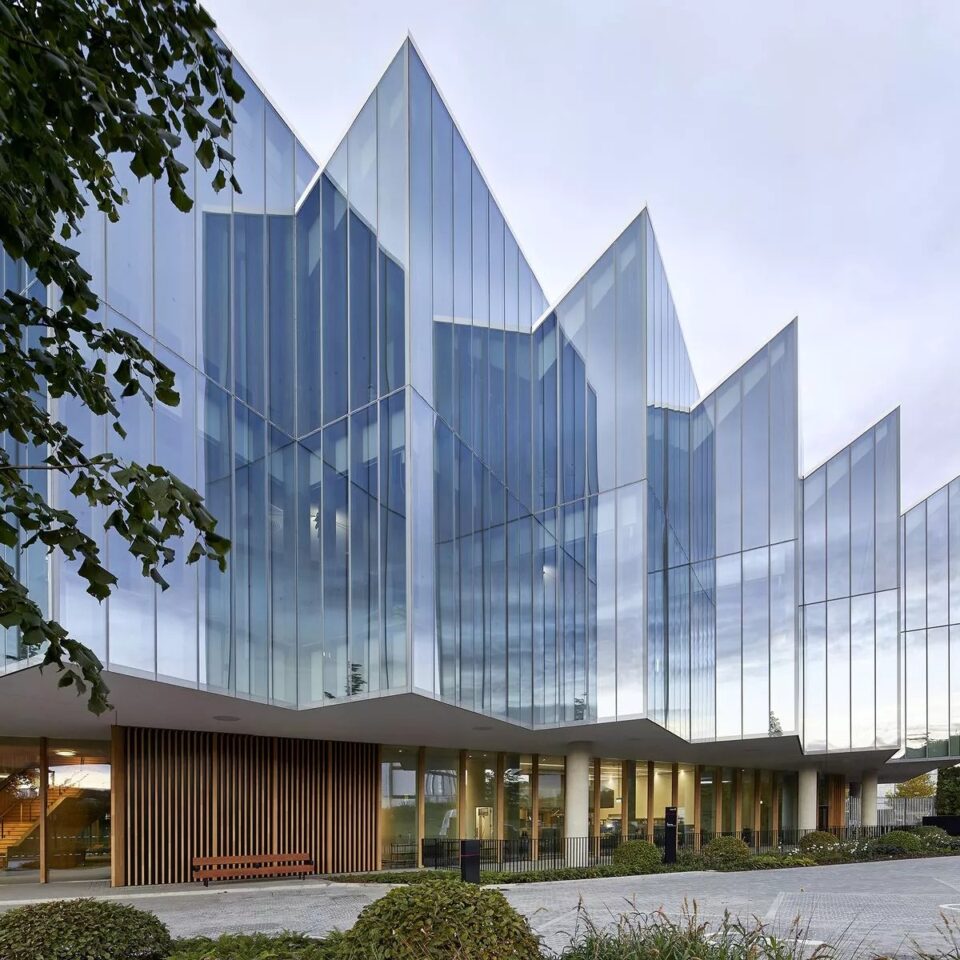
Fifty years ago, world-renowned architecture firm Herzog & de Meuron designed the M+ Gallery in Hong Kong. The museum celebrates half a century since their opening with a showcase of the company’s innovative architectural practice. The exhibition features newly donated models, drawings and material samples, focusing on built and unbuilt projects in China. These include M+ (2013 – 2020), Tai Kwun in Hong Kong (2006 – 2018) and the National Stadium in Beijing (2002 – 2008), as well as urban planning projects that respond to how territory and landscape fundamentally shape cities. The show centres around exact replicas of the wood display shelves developed for the firm’s head office in Basel, honouring co-founder Jacques Herzog’s 2002 comment that “since architecture itself cannot be exhibited, we are forever compelled to find substitutes.” This open storage format offers visitors an intimate glimpse inot the creative processes and thinking behind their groundbreaking works.
Words: Emma Jacob
1. Maggie’s Yorkshire, Heatherwick Studio, Garden design by Balston Aguis © HUFTON AND CROW.
2. Geoffrey Bawa, Kandalama Hotel, Dambulla, 1992 © Sebastian Posingis.
3. Tofu Factory, DnA_Design and Architecture. Photo: Wang Ziling.
4. The Discovery Centre (DISC) by Herzog and de Meuron | Credit: Hufton+Crow.
5. Maggie’s Edinburgh, Richard Murphy, Garden design by Emma Keswick © Eoin Carey.
6. National Stadium, Beijing. Photo: © Iwan Baan. Image courtesy of Herzog & de Meuron.


