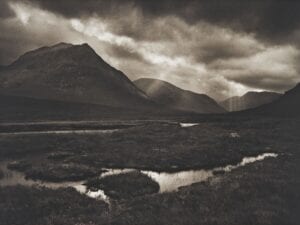
There’s a rare circle of artists that exists within photography: those whose creative genius came to light posthumously. Their images, once overlooked, misunderstood or simply hidden from public view, now serve as a touchstone for the medium. Perhaps the most famous example is Vivian Maier, whose New York street photography caught the world’s attention in 2013, four years after her death and six years after storage locker sales in Chicago unearthed thousands of her photos and negatives. Another is Francesca Woodman, whose black-and-white portraits of herself and female models gained critical acclaim after her premature death at 22. Now, joining that list is Herbert Smith, who passed away in 1987, leaving behind a collection of 80,000 photographs. It was decades later that his grandson, Jack, dug out the boxes of film one Christmas, uncovering a treasure trove of street photography. Herbert was a fellow of the Royal Photographic Society, creating portraits of cultures and communities from around the world. The discovery would form the basis of A Blank Wall, a project that has seen Jack painstakingly digitise the collection. Five years on, the process continues, with each image slowly bringing another piece of his grandfather’s legacy to the world. We caught up with Jack to find out more about Herbert, what it means to reconnect with his family history through photography and what’s next for the project.
A: A Blank Wall began with the discovery of a large crate of your grandfather’s photographs. Can you tell us more about the moment you uncovered these images?
JS: My grandfather, Herbert Smith, passed away in 1987, leaving his life’s work behind. The photographs were sealed and packed away by my dad in the early 1990s for safekeeping and lay untouched in my parent’s house since then. This huge crate of film had been around my whole life, but due to its weight it mostly stayed in the same spot in the garage, waiting patiently to be opened. One Christmas I had returned home, and I decided on a whim to cut open the plastic bags wrapping the crate and look inside. I remember my confusion at the endless boxes and numbers in my grandfather’s handwriting – opening one of the crates and holding the 35mm film up to the light to see the colours shine through. It took me a while to realise what I was actually seeing and how incredible the images were. I knew I had to keep digging. I repackaged the boxes and started to think about how to share these photographs with the world.
A: Tell us a bit about your grandfather, the person behind the camera.
JS: To me, my grandfather, Herbert, is still a bit of an enigma. Having never met him, I’ve been learning so much about his life with my grandmother (whom I also never met) through his work –alongside first-hand accounts from my dad and some of his few remaining friends. Herbert was born in 1917 on Boxing Day in Bolton, Manchester. He started taking photos during high school and university, whilst studying medicine, continuing to grow his photography collection as he began travelling with my grandmother. He went on to visit far-flung places, going to over 40 countries throughout his life. This continued until his premature passing in the late 1980s. He travelled as a curious explorer at a very different time to today, capturing everyday life with great personality and intimacy. Through his photographs and my conversations with friends and family, I’ve developed an image of a quietly thoughtful, intelligent man – deeply passionate about his interests, whether photography, model making or his love for playing the piano. With a dry sense of humour and a seemingly unstoppable desire to wear a shirt and tie in even the most inhospitable places, I would have loved to meet him and understand how he managed to juggle so many complex passions.
A: Your grandfather had a remarkable ability to capture the world through his lens. How would you describe his photographic style?
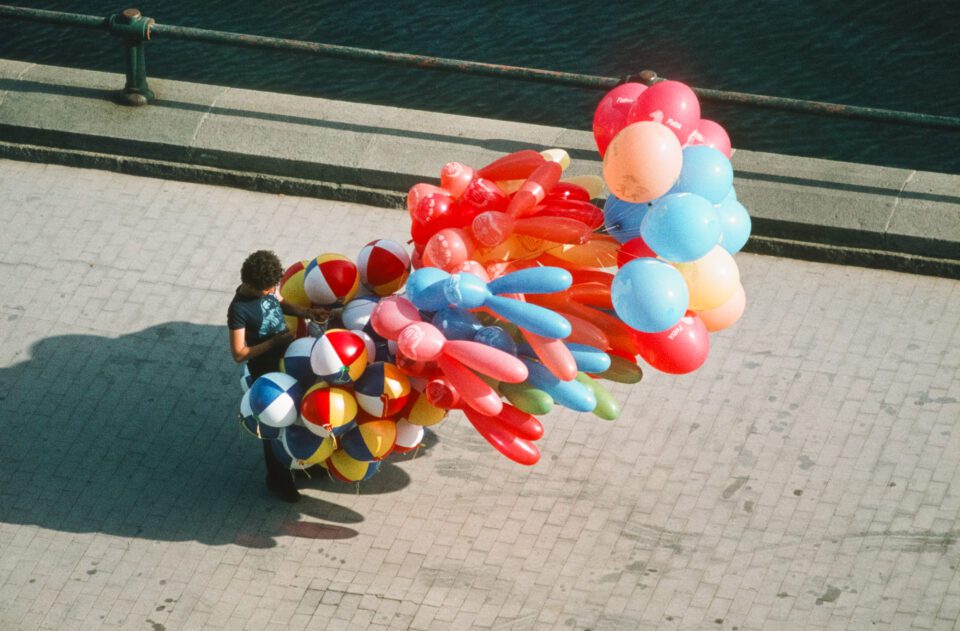
JS: This is a hard question to answer. He had so many different themes and quirks in his work that it’s difficult to distil them into one style. He had a great eye for capturing unexpected moments and places throughout his journeys. My grandfather travelled in a way similar to how many people do today – across continents with a small, light camera that allowed him to capture photos quickly and informally. His style reflects that. In a way, these are “holiday photographs” – images taken for himself and his friends, showing what he saw. He was fascinated by people and community, whether at home or abroad, and his work often took the form of street portraiture: people going about their everyday lives, surrounded by the chaos or beauty of their environment. Mothers and children, old men and boys, or groups of locals are photographed in every country he visited. It was these connections that he shares through his work.
A: This collection is huge – 65,000 colour images on film and 15,00 black-and-white negatives. How did you go about sorting and archiving these photographs?
JS: My work was made much easier by the fact that everything was already perfectly dated, ordered and labelled. He had set up a complex system of codes and colours, which took me a year or two to decipher, but it allows me to continually go through the film and curate, scan and edit each image one by one. The process of digitising is time-consuming and ongoing. I’ve been going through the film from the latest (1985) to the earliest (1945). This summer, I spent over a month almost non-stop viewing film to get a sense of the collection’s breadth, photographing each slide in bulk with a high-quality lens. I also select images I think are worth sharing publicly or printing, collaborating with partners in London to process them into very high-resolution digital files. These then go through further editing and testing before being released as archival prints on my website. As you can imagine, this process feels endless. I have learnt to invest time in the film only when I have long periods free, or it can quickly take over your life!
A: Herbert travelled extensively from the 1940s to the 1980s, capturing moments in places that have drastically changed. How does this time capsule of images inform our understanding of the world during that period, especially in regions like Afghanistan, Nepal and Bolivia?
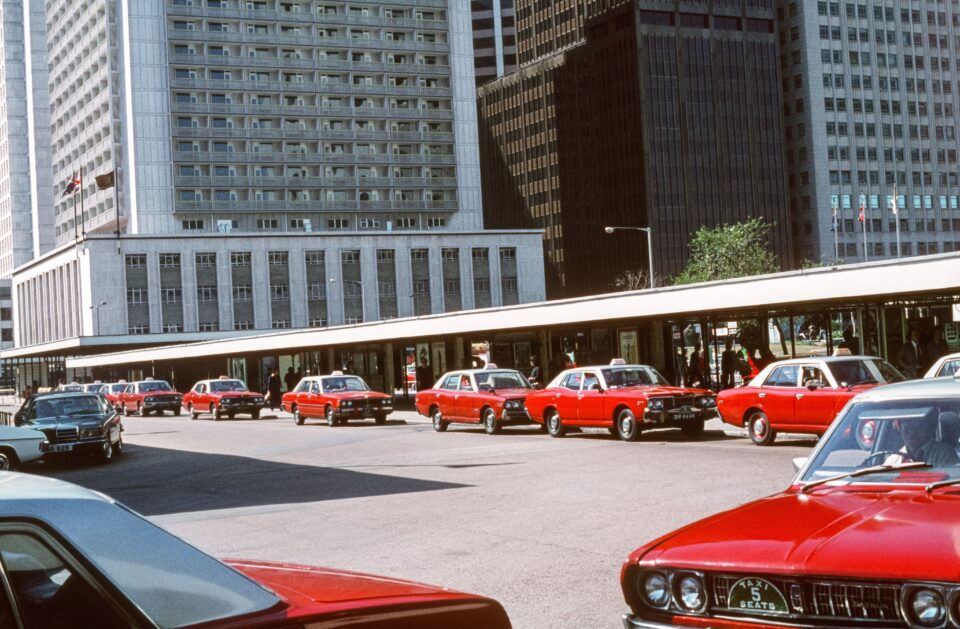
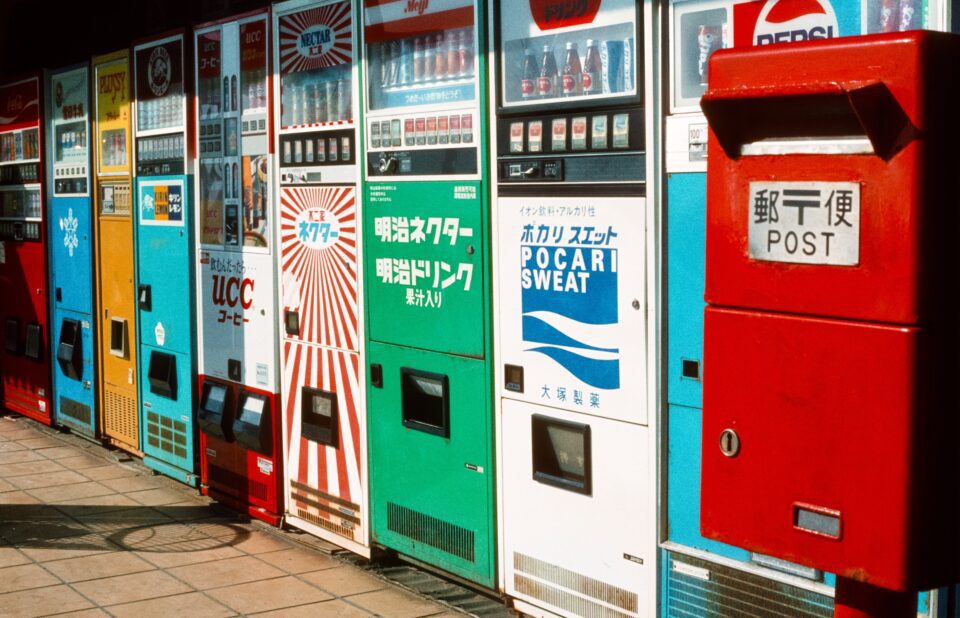
JS: He photographed the UK and much of Europe early in his life, and the differences between then and 2025 are immense. From the redevelopment of England after WWII to distinctly 1980s-style cities around the world, many of his images have a nostalgic quality, reflecting travel and people from a bygone era. However, most fascinating are the places, such as Afghanistan, that have since had their public image distorted by years of conflict and political turmoil. Herbert’s photographs show life as it truly was – taken at street level, amongst people who are simply going about their daily lives. They reveal the enduring strength of community, culture and tradition in some of the poorest places in the world.

A: Do you have a personal favourite image?
JS: My personal favourite changes as I discover more of the photographs. I have only seen about 70% of the collection, so my future favourite may still be hidden. One of my current obsessions is Three Boys & Their Street, taken in 1979 in Fleetwood, Northern England. The shot depicts a colourful terraced street, and three children playing up to the camera. It is accompanied by a second image of the boys much closer, their faces bulging into the lens as they joke around. Taken close to my grandfather’s house in Bolton, the image encapsulates everything I love about his work. There is a nostalgic nod to the era and people within their home. The street and its inhabitants likely don’t exist anymore, which makes it even more beautiful.
A: You’ve described the mission of A Blank Wall as sharing these untold stories behind the photographs. Could you highlight a few that have particularly resonated with you?
JS: In 2025, I decided to buy a motorbike in Guatemala and travel to the same locations he had visited, recreating as many of his photographs as I could, 45 years later. Hundreds of kilometres and many stories later, I found a handful of matching images across remote areas, delving into the country’s rich Indigenous culture, which remains as strong today as it was then. However, it was the final photograph – a remote mountain view – that truly struck me. During my last week in Guatemala, I tracked down the location of a mountain road, hours from anywhere. I parked my bike and wandered into a dusty field, completely alone, the breeze in my hair as the pristine view of Volcán Cuxliquel unfolded before me. My grandfather had led me there – to the same spot he had stood nearly half a century earlier, purely by chance. It’s hard to describe the emotions I felt in that moment. That is the power of photography.
A: What has it been like for you to reconnect with your grandfather’s legacy?
JS: It’s been surprisingly emotional. I make a lot of videos about my relationship with him, but it’s hard to put into words what it feels like to see a close relative’s life unfold before you eyes in such vivid detail. I often wonder what he would have been like, and why he chose the places and subjects he did. That sense of mystery and discovery is what drives me to keep pushing A Blank Wall to its full potential.
A: How has the rest of your family responded to the project?
JS: One of the best parts of this project is being able to share what I discover with my family. Apart from my dad, no one in our family knew my grandparents on his side, so the project offers a window into a part of our history we’re collectively learning about. My brothers are just as invested in the stories I uncover as I am, and my dad is intrigued to see where the project may go. He also has his own vast collection of brilliant photography from around the world. My family’s support has been incredible from day one.
A: Looking forwards, how do you hope this project evolves?
JS: I have endless plans to use the platform I am building to expand into the other areas of creativity. I want to take the project out of the digital space and into the physical, with multiple plans for a book next year, more exhibitions and more prints of varying types, sizes and styles. I love also using the platform to highlight other people’s creativity – I have so many plans for collaborations and joint projects. I want to combine the rich history and culture within my Grandfather’s story with music, with ideas for a radio show, events and fashion, using his imagery on a collection of clothes. The possibilities are endless. The amount of untold stories I have yet to tell is slightly overwhelming, but I will continue to tell them online for as long as I can, sharing his work and what I discover through it to as many people as possible.
Find out more about A Blank Wall: ablankwall.uk
Words: Emma Jacob & Jack Smith.
Image Credits:
All Images Courtesy of Jack Smith.